
E-Reads
E-Reads Blog Featured Titles eBook Download Store Contact Us
Browse Titles Categories Authors FAQs About Us
Menu Graphic
Menu Graphic

Richard Curtis on Publishing in the 21st Century

The literary agent, author advocate, and publishing visionary Richard Curtis shares his insights in this special blog of essays and articles for writers and all others tracking the rapidly changing world of books.

Menu Graphic
Menu Graphic

Search


Categories
More...


MobiPocket

Fictionwise.com

Sony Connect

Baen Books

eReader.com

Amazon Kindle


RSS Feed

Fine Books For Fine Readers

Special Promotion

Sunday, February 7, 2010

Panic in Blogger Park! Google Pulls Plug on FTP Feed

Last week many bloggers received an email notice from Google that triggered an OMG moment, except that the "G" stood for Google. The firm announced the imminent shut-down of support for those who use Google's FTP site to post their blogs.

Though less than 1% of active blogs are published on FTP, the medium "remains a significant drain on our ability to improve Blogger," writes Rick Klau, the company's Blogger Product Manager. Thus Google will turn the lights out on FTP on March 26 2010. You can read the full text of his announcement here.

"FTP", which stands for "File Transfer Protocol," is a common and convenient method for transferring or exchanging files between computers over the Internet. Most blogger platforms like Blogspot, WordPress and Drupal do not rely on FTP. Those that use Google's FTP may not realize the huge impact on Google's server. Every time you upload a new post via FTP, Google's server republishes and re-synchs every previous single file, image, archive page, and link. If you've been blogging for years, the hit on the FTP is mammoth. Savvy bloggers have been wondering when Google would finally pull the plug. "It was too good to be true," one told me.

Those bloggers that do depend on Google FTP are going to have to scramble to migrate their blogs to another host. Google has offered all sorts of support to make the transition as easy as possible. First, they'll issue more email information in coming weeks, and have created a dedicated blog which you may visit here. In addition, they tell us that...
  • We are building a migration tool that will walk users through a migration from their current URL to a Blogger-managed URL (either a Custom Domain or a Blogspot URL) that will be available to all users the week of February 22. This tool will handle redirecting traffic from the old URL to the new URL, and will handle the vast majority of situations.
  • Blogger team members will also be available to answer questions on the forum, comments on the blog, and in a few scheduled conference calls once the tool is released
Klau expressed his regrets, acknowledging that his company's decision "will frustrate some users."

Frustrate? How about opening their veins in a tub of warm water! If you're working your blog through Google's FTP feed we strongly suggest you put your backside in overdrive and find an alternative.

Richard Curtis

Labels: , , ,

Thursday, February 4, 2010

John Sargent: Macmillan Royalties Going Up

Were you one of the skeptics who faded me on my pinkie bet that e-book royalties would go up? Well, chum, you owe me a pinkie. Royalties are going up, at least at Macmillan. But even I'm stunned that it took only four days. I should have remembered that in the digital world, things that used to take two years now take two hours.

The revelation about a royalty boost was embedded in an update by CEO John Sargent on Macmillan's negotiations with Amazon in which he assured us that Amazon is "working very, very hard and in good faith" to resolve the issues that have stalemated publisher and retailer ever since Apple introduced a retail model that restores control, and ultimately more money, to publishers. Here's Sargent's full statement.

But if there has been no big breakthrough in Macmillan's relationship with its retailers, there's been a huge one in its relationship with authors and agents. Sargent says:

"And now on to royalties. Three or four weeks ago, we began discussions with the Author's Guild on their concerns about our new royalty terms. We indicated then that we would be flexible and that we were prepared to move to a higher rate for digital books. In ongoing discussions with our major agents at the beginning of this week, we began informing them of our new terms. The change to an agency model will bring about yet another round of discussion on royalties, and we look forward to solving this next step in the puzzle with you."

We'll review the sweetened royalty and report to you.

Richard Curtis

Labels: , , ,

Paradigm Shift in Striking Evidence at Digital Book World

After two intense days of speeches, panels, presentations, celebrations and debates, breakout sessions, networking and exhibits, there was so much to take away from the Digital Book World conference that my head swam. But after contemplating it all in tranquility I was able to reduce the takeaways to one simple but powerful impression: the paradigm shift in publishing from a tangible culture to a virtual one has finally begun to take hold, and its grip will endure.

The moment I beheld a CD-ROM I knew that a day would come when I would behold an electronic book reader. For years I have chronicled the evolution of digital technology, noting its incremental but inexorable trajectory toward a tipping point. I cannot say that we have reached it - indeed, Impelsys's Sameer Shariff told an audience at DBW that the industry is where the primitive video game Pong was in the early 70's. Nevertheless, the conference attendees clearly grasped that the gravitational pull on their home planet has weakened and the tug of a new world has become palpable.

How to characterize that new world? It's no longer about the product. It's about community, the impossibly tangled, virally sprawling, thrillingly energetic, intoxicatingly imaginative web of writers, editors, readers, entrepreneurs, aggregators, curators and technologists in the service of authors and books, utilizing tools of staggering complexity and power. It's bigger than any of us but publishing people, even old timers (over 40), have lost their fear and accept the new medium and its tools not just as inevitable but as benign.

Indeed, it took an over-40 veteran, publisher-turned-agent Larry Kirshbaum, to remind the assembly that however dazzling the delivery systems may be, the real magic of books is produced by authors and publishers, and it always will be. Good for you, Larry! And a big shout-out to Mike Shatzkin, F+W Media and the other sponsors for creating an event that would enable us to grasp how vast and wonderful our community is.

We are told that "May you live in interesting times" is a curse. I cannot remember a more interesting time for publishing than today, and I feel blessed to witness and be part of it.

Richard Curtis

Labels: , , ,

Tuesday, February 2, 2010

Curtis Chairs DBW Panel on Future Book Contracts

"In a dynamic panel at Digital Book World about rights in the electronic age," writes Rachel Deahl in Publishers Weekly, "a number of hot-button, complex issues were broached on Tuesday. One of the best rights panels of the afternoon, 'Tomorrow's Book Contract,' moderated by Richard Curtis (of Richard Curtis Associates), saw lawyers, agents and an executive at one of the 'big six' coming up against pressing problems regarding the fact that the industry has no solutions for how to address certain rights snafus that have arisen as a result of the increasingly fractured, digital retail market for books."

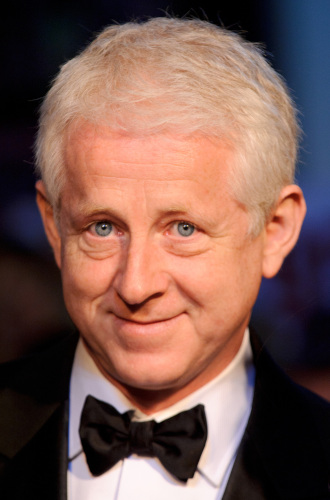
Curtis's panelists were agents Simon Lipskar and Miriam Kriss, attorney Dev Chatillon, and Penguin USA Corporate Director of Business Affairs John Schline. Curtis is pictured left. Another illustrious chairman is pictured right.

For the full story read Digital Book World: Debating E-Rights Issues

Labels: ,

Sunday, January 31, 2010

Publishing's Weekend War: 48 Hours That Changed an Industry

The facedown lasted from Friday evening to Sunday afternoon but when it was over the landscape of the book business was permanently altered. On Friday, in reaction to Macmillan's refusal to play the Kindle pricing game by Amazon's rules, the retailer punished Macmillan by extinguishing the publisher's Buy buttons on the Amazon website.

Obviously, Amazon hoped this tactic would bring Macmillan to its knees. Instead it triggered another wave of customer outrage as Kindle owners reacted just as they had in 2009 when Amazon reached into their Kindles and recaptured files without notice or explanation. Though the response of the author community was mixed, many authors were angered at becoming victims of a war they scarcely understood but they too blamed Amazon.

Amazon also underestimated the possibility that other major publishers might support Macmillan. This turned out to be a well founded concern. In the past few weeks all of the big houses except Random House conducted discussions, and in all likelihood negotiations, with Apple to forge a new retailing model that would return control of e-book pricing to the publishers, who had become alarmed that Amazon's insistence on a $9.99 price cap would force them to accept lower wholesale terms. Conditions were ripe for mutiny, and on Friday the test of wills began. By Sunday, as Amazon realized that this was a fight it could not win, it capitulated.

I stated that this might well be a turning point for the book industry - both e-book and print - and I stand by that statement.

I also made a prediction that publishers will no longer be able to hold the line on the current 20-25% royalty rate offered to authors. In fact I guaranteed that they won't be able to, and I stand by that guarantee as well. Authors, and more importantly their powerful literary agents, have viewed the new landscape and found it rich with the potential for profit. They perceive the current royalty level as arbitrary and without basis in the economies of e-book production and distribution. The current rates cannot and will not hold. Just as Amazon blinked in its stare-down with Macmillan, Macmillan and its Big Six companions will also blink in the inevitable confrontation with authors.

You heard it here first.

Richard Curtis

Labels: , , , , ,

Amazon Blinks in Macmillan Facedown: "We Will Have to Capitulate"

Boy, that didn't take long!

Remember the pinkie bet I made ten minutes ago? I wagered that once publishers' hands were untied from the $9.99 price ceiling on e-books we would see an increase in the royalty percentage paid by publishers to authors on e-book revenue. Well, I'm halfway there to winning it. Amazon's Kindle team has just released a statement accepting Macmillan's position even though disagreeing with it. The statement in part says:

"We will have to capitulate and accept Macmillan's terms because Macmillan has a monopoly over their own titles, and we will want to offer them to you even at prices we believe are needlessly high for e-books."

The Kindle spokesblog added that "We don't believe that all of the major publishers will take the same route as Macmillan." Perhaps not, but they will now be encouraged to do so by Macmillan's stand. I don't think it's an exaggeration to say this may be a defining moment in the history of the e-book industry.

Read the Kindle Team's full statement here.

Richard Curtis

Labels: , , , , ,

Guaranteed: E-book Royalties Will Rise When Publishers' Hands Untied

I don't know if people still make pinkie bets, but when I was a kid that's what we called friendly wagers with no money at stake - just the satisfaction of being right. And I'm making a pinkie bet right now: If publishers can untangle themselves from the current e-book pricing model that ties their hands with a $9.99 ceiling, author royalties will rise. Any takers? Warning - before you extend your pinkie, you must know that I never bet on anything I'm not absolutely certain about.

Currently the e-book royalty offered to authors by five of the Big Six is 25% of the publisher's net receipts, and Macmillan's is even lower. Indeed, it's the lowest in Big Publishing: 20%. And because it is, Macmillan has attracted less support from the author community for its facedown of Amazon than it would otherwise receive. Here for instance is a line from a Silicon Valley blogger that called Macmillan "evil": "they're trying to force all ebook vendors to adopt the new contract, while forcing authors to accept a below industry average (20% vs. 25%) on ebook royalties."

If, as a result of negative publicity, Amazon relents on its rigid pricing formula, e-book revenues will increase and it will be so much harder - indeed, it will be intensely embarrassing - for publishers to continue parceling out the mingy royalty they now proffer. How much higher will the royalty go? Publishers will kick and scream over every point they have to give up, but in time someone will blink and go to 50%, and the rest of the industry will follow.

You can get the house on that, but I'll accept a friendly pinkie.

Richard Curtis (who is happy to disclose that E-Reads pays 50% royalty to its authors, and has paid it from Day One, 2000).

Labels: , , , , ,

Friday, January 29, 2010

What Do Amazon and Prada Have in Common?

Today a publisher brought to my attention an oddity on the Amazon.com website. It seems that you cannot purchase more than three copies of many bestsellers. On the evening of January 28, 2010 I viewed the top ten books on the Amazon.com bestseller list. In every case I was prohibited from putting more than three copies into my shopping cart. To make certain this was not a fluke, I sampled the first 50 titles on the list but did not find any exceptions to the three-to-a-customer rule.

You can see this for yourself by clicking on the following links for the top five titles, then going to the "Quantity" drop-down box over the "Add to Shopping Cart" button. (As listings change, future visitors to this posting may not find the same condition.)

The Kind Diet - list price $29.99, Amazon price $16.49
Food Rules - list price $11.00, Amazon price $5.00
Game Change - list price $27.99, Amazon price $14.50
The Help - list price $24.95, Amazon price $9.50
A People's History of the United States - list price $18.95, Amazon price $10.00

It was not until I clicked on #53 - What Would Google Do? (list price $17.91, Amazon price $9.18) - that the Quantity drop-down box indicated I could buy as many as 30 copies. I did not try to buy multiple copies by buying three and three and three etc. - I don't really need one copy of Food Rules let alone six or nine or thirty - but I'm sure a clever shopper could find a way around the rule. It occurred to me however that if I did order three copies ten times, the freight and handling charges would be substantially higher than if I purchased 30 in one shot.

But that's just incidental to the bigger question of why one must buy no more than three copies in one transaction.

I can understand this restrictive practice in the case of a high ticket item, where one $10,000 fur coat or $50,000 diamond ring per customer is enough. Pictured here is a Prada Ostrich Leather Tote listing on Saks Fifth Avenue's website for $5,850.00. On the bag's web page is this notice: DUE TO POPULAR DEMAND, A CUSTOMER MAY ORDER NO MORE THAN THREE UNITS OF THIS ITEM EVERY THIRTY DAYS.

But books are not luxury purchases. Why would Amazon prevent us from buying as many copies of a book as we want? After all, the more we buy the more money Amazon makes, yes?

In listing the books here I included their list price versus their Amazon.com price. I wonder if therein lies a clue to the restrictive policy. Assuming a 50% publisher discount, Amazon's profit margin on these books is slim to none. For instance, on A People's History of the United States (list price $18.95, Amazon price $10.00) Amazon nets about $.50 profit. Food Rules retailing for $11.00? The wholesale price would be $5.50. Amazon is selling it for $5.00, a $.50 loss. For The Help (list price $24.95, Amazon price $9.50), Amazon is losing $3.00 a copy.

Nothing unusual here: retailers in every business work on a slim margin, and loss leaders are a common competitive practice. However...

Suppose I opened a bookshop and stocked it with bestsellers purchased from Amazon. I could buy 100 copies of The Help for $9.50 each and sell them in my store for, say, $15.00. Even folding in the cost of freight from Amazon to my shop, I would make two or three dollars profit and still sell the books far beneath the publisher's list price.

I anticipate your question: why would people buy from my shop when they could get the same book cheaper from Amazon? The answer is, some will but some won't. That's why we have independent bookstores (barely, but we still do have them).

If this reasoning is correct, then the Amazon's three-to-a-customer rule makes sense: Amazon doesn't want resellers stocking their stores with Amazon books. Why not? Because Amazon doesn't make any money on those resales.

Authors will recognize an irony here. When their books are resold via Amazon, Amazon gets a piece of the resale of those used books but the authors get nothing. Could it be that Amazon is worried that it is not benefiting from resales that do not use Amazon as agent?

This theory could be all wet. But if it is, I invite smarter business heads than me to speculate on just what's behind the three-book cap on Amazon's bestseller shopping cart. Meanwhile, publishers and authors may be hurt by the curtailment of large book orders on the Amazon.com retail site.

Richard Curtis

Labels: , , ,

Wednesday, January 27, 2010

Ladies and Gentlemen, Start Your Apps

The other day we reported that Apple-watchers have taken to calling the imminent tablet The Unicorn because of all the magical properties being attributed to it - and because, of course, no one has seen it. If only there were a fly on the wall of Apple's Cupertino headquarters, a fly with a particularly sensitive transmitter...

In fact we have one. It's a company called Flurry Analytics. Flurry has developed tools that gather from app developers information about applications they are working on. Jenna Wortham, writing about Flurry in the New York Times, reports that "Flurry can generate reports about the location of an application’s users, for example, or how long it took a user to complete a game level."

It turns out that Flurry picked up some feedback from about 50 devices on or around the Cupertino campus and came to some conclusions about what we're going to find under the hood of Apple's tablet when we finally get our hands on one for a test drive.

Check Flurry's chart below and you'll see that the top three apps downloaded from Cupertino are for games, entertainment and news/books, followed by lifestyle, utilities, music, photography, travel, finance, social networking, weather and miscellaneous.

That games and entertainment are the # 1 and #2 apps should not surprise us, especially when one considers that the tablet's larger screen will enable more than one user to play games on it. But the third one, news and books, raises an eyebrow in view of Apple CEO Steve Jobs's declaration that nobody reads anymore. It sounds as if people are going to be reading newspapers and illustrated books big time on the iSlate, Unicorn or whatever it's called.

For more speculations on the Apple tablet, read Jenna Wortham's A Playland for Apps in a Tablet World. The speculation should end later today when Apple's formal announcement puts us all out of our misery. But if that Flurry fly on the wall of Apple's lab is transmitting accurate information, Apple's announcement should be anticlimactic.

Richard Curtis

Labels: , , ,

Monday, January 25, 2010

Pundits on Parade: Digital Book World Conference Begins Today

Ladies and gentlemen, start your crystal balls.

Digital Book World, a conference devoted to exploring the future of publishing both digital and conventional (if there is any such thing anymore) begins today with guru Mike Shatzkin as its driving organizer and master of ceremonies. It will take place at the Sheraton New York Hotel & Towers in New York City, January 26th and 27th.

The schedule is studded with publishing notables who have led the industry's charge into cyberspace, but it will be attended by professionals who have to apply the thrilling advances in technology to a business still mired in another century, arguably the 18th.

But "Digital Book World isn't just about strategies, it's also about the network," says the event's website. "Because of our focus on consumer publishing, our speakers and attendees represent publishers of all sizes and niches – from HarperCollins, Penguin and Random House to Tor, Chelsea Green, National Geographic and Ellora's Cave – as well as literary agents and other allied professionals, and vendors with an interest in the future of consumer publishing."

Among the highlights are:
  • An overview of Google Editions
  • "Back-Loaded Book Deals" with Roger Cooper, Bob Miller and several agents
  • "The Next Generation of eBooks"
  • "Tomorrow’s Book Contract: New Language and Provisions to Reflect New Conditions" hosted by yours truly
A big draw on Wednesday will be "The Changing Agent-Author Relationship: How it Will Affect the Business Model" moderated by Sara Nelson of Oprah's Book Club. Her panelists will be agents Gail Hochman, Scott Waxman, Brian DeFiore, and Wendy Keller of Keller Media.

A spectral but influential presence will be Apple, which will be announcing details of its tablet on the afternoon of the conference's second day, and not a few attendees will be glancing at their blackberries to learn details of the breaking news. Ironically, that will happen around the time of a concluding statement by Guy LeCharles Gonzales of Digital Book World entitled "The Future of Publishing is Bright".

You can click here to visit the conference website and here to view the schedule.

Richard Curtis

Labels: , ,

Who Should Rescue Borders? How About a Publisher?

When Galley Cat invited me to make some predictions for the coming decade, I conjectured that sometime in the near future we would see the merger of a major retailer and a major publisher. Here was my reasoning: "A combined publisher/retailer solves many problems for both.The retailer owns the content and doesn't have to pay a premium for it. The publisher does not have to pay a premium to distribute its books. There would be huge efficiencies of manufacturing and distribution."

I've had about a month to think about what I said, and I want to revise it. The efficiencies of a retailer/publisher combine would not merely be huge. They would be decisive. If you don't believe it, ask Barnes & Noble and Amazon.

In 2003 Barnes & Noble acquired Sterling Publishing, described at the time as "one of the top 25 publishers in America and the industry's leading publisher of how-to books." Publishers were gravely concerned, and they had every reason to be. Barnes & Noble's own titles were like a supermarket's house brand, often undercutting the prices of outside purveyors.

And now Amazon is a publisher too. It started with its Encore program aimed at identifying overlooked books and authors. That was followed by the creation of a service called CreateSpace aimed at self-published authors. And now Amazon has begun publishing mainstream authors like Stephen King and recently acquired Stephen (The 7 Habits of Highly Effective People®) Covey for the Kindle.

The potential for mischief created by such combines was cogently articulated a few years ago by Morris Rosenthal and I urge you to read it. In essence, the savings generated by dissolving the barrier between seller and buyer enable the combine to lower prices below - sometimes far below - those charged by publishers that do not own their own retail branch. To state the case as simply as possible: Barnes & Noble and Amazon.com, the two most powerful retailers in the book business, have become competitors of the very publishers they serve.

Though these retailers have no qualms about becoming publishers, publishers on the other hand are terrified of becoming retailers for fear of provoking the wrath of their key accounts - B&N and Amazon! When publishers do dip a timid toe in the water and try to sell their books direct to the consumer, they offer them at full list price, which cannot possibly compete with the deeply discounted prices charged by B&N and Amazon. Yet, if they wanted to, publishers could sell their books directly to the public at 40% discount or higher and thus level the playing field.

The solution? To survive, to remain competitive, publishers may have no choice: they must either become retailers or end up being acquired by them.

At this moment Borders, one of the best and most popular bookstore chains in the business, is in a life and death struggle to remain viable. If a publisher were smart it would rescue Borders and go into the retail business.

Retailers, I said a while ago (see Direct Sales: Publishing’s Last Stand), are intermediaries in a world that is rapidly disintermediating. As big as they are, retailers like Barnes & Noble and Amazon are vulnerable to market forces bent on eliminating middlemen, and that's precisely why they have begun publishing books. The digital revolution demands a direct relationship between content provider and consumer. Merging a publisher and a bookstore like Borders would bring both struggling enterprises a little closer to that direct relationship, to profitability and to competitiveness.

Do I hear any bids?

Richard Curtis

Labels: , , , , ,

Wednesday, January 20, 2010

Guessing Shape of Elephant? Easy. iSlate? Hard

Do twenty rumors add up to one truth? Maybe.

Like the blind men in the fable who try to infer the shape of an elephant by touching its body parts, countless Apple-watchers ranging from savvy geeks to clueless crackpots have been speculating on the nature of the iSlate tablet (including, by the way, the name itself). The difference is that the characters in the famous story actually had access to the elephant's trunk, tail, ear and tusk, whereas the speculators haven't even glimpsed the iSlate.

But a website called The Green Room has culled all the rumors and assembled them into an iSlate, or at least the tablet equivalent of the elephant. The composite they've constructed comes complete with callouts referring to each rumored component. It's pictured left, but click here to see it full size and legibly. A fun feature is Green Room's evaluation of the rumors ranging from highly likely to highly unlikely. Here are a few of those callouts with the URLs of the source of the gossip.
The observation that interests us most is that the Pixel Qi screen is not a likely possibility. As we wrote recently (See Hybrids Work for Cars. Why Not for Screens?), Pixel Qi is a hybrid that alternates between battery-draining full color for applications like video, to battery-saving black and white for text reading. We had surmised that Pixel Qi might solve the problem of short battery life in the iSlate. But if The Green Room is right and Pixel Qi is a "very unlikely" feature of the iSlate - well, where does it leave us?

With a lot of questions, is where. They'll be answered on January 27th - unless Apple has simply hired an auditorium to announce it's installing new toilets in the executive washroom.

Okay, do you think you know the answers? If you do, Gizmodo is offering a free Apple tablet to whoever guesses the most features on the device (including the name). Here are the contest rules:
Fill out the survey before the Apple event, and whoever gets closest to having all the answers right is eligible to win a free Apple tablet—whatever it ends up being called—courtesy of us.

• If the final feature is not exactly like one of the answers we provided, we will pick the closest answer. If the feature is not in the answers, that question will be void, but the rest of the questions will still be valid towards winning.

• There is a reasonable chance that many people will get the correct answers. In the event that there are, all of those who made the cut will go into a drawing, from which we'll pick a winner at random.
Richard Curtis
iSlate background image created by Fotoboer, graphic © 2010 tgr network.

Labels: , , ,

Tuesday, January 19, 2010

Apple Promoting a New (and Radical!) Business Model for Selling E-Books?

Is an e-book a physical thing? Or is it virtual and without mass? An object or a file? And is there a different model for selling virtual than there is for selling physical?

We're about to find out. Jeffrey Trachtenberg of The Wall Street Journal reports that Apple has been in discussions, and possible negotiations, with HarperCollins over the terms of e-books to be carried on the soon-to-be released Apple tablet, which everyone is calling the iSlate until the official announcement on January 27th proves otherwise. It would appear however that Apple is discussing a similar agenda with other members of the so-called
big six publishers (Simon & Schuster, Random House, Penguin, Hachette, Macmillan and HarperCollins).

Michael Cader, publisher of Publishers Lunch, has written an extensive analysis drawn from the molten news as it leaks out of so-called confidential discussions.
"Apple," writes Cader, "has agreed in principle to do business with publishers under what is called the agency model--as opposed to the wholesaling model currently in place for ebook sales and most physical book sales. In the agency model, the publisher is considered as keeping possession of the actual goods (the ebook files) and it pays a commission to its authorized selling partners. So the publisher sets the retail price of the ebooks, and the commissioned agents have no ability to change that price. Ebooks sold under the agency model would be offered to any established trading partners who agree to the commission and other particulars."

Cader adds:

"Given that publishers, agents and even retailers have already skirmished over whether ebook sales are a traditional sale or a license, and given the completely different nature of selling access to a digital file versus a physical object, there's plenty of room to argue that a new selling model is only logical and overdue."

The implications of this development cannot be overstated, for it means restoration to publishers of control over the timing and pricing of e-books. It also means some pushback against Amazon, whose approach to pricing and simultaneous release of e-books has pretty much put publishers in a corner.

You can read the Wall Street Journal article here.

We've come a long way since Apple CEO Steven Jobs, referring to e-books, sneered "People don't read anymore." (See Will Steve Jobs Eat His Words with Ketchup, Mustard or Mayo?)

Richard Curtis

Every Blogger owes a debt of gratitude to newspapers and magazines. This posting relies on original research and reporting performed by the Wall Street Journal.

Labels: , , , , ,

Monday, January 18, 2010

I Want my E-Book and I Want it NOW - Or Else

Eric Engleman, in his Amazon Blog, writes that Kindle fans are punishing a publisher that has held back the Kindle version of a just-published book.

The book in question is Game Change by Mark Halperin and John Heilman, the juicy tell-all about the 2008 presidential campaign. Though it has generally garnered raves for its brilliant investigative reporting and jaw-dropping revelations, and indeed has received 59 five-star reviews on Amazon, it has also received no fewer than 119 one-star reviews, with scarcely any ratings in between the two poles. Why?

"The book has been deluged with one-star, negative reviews from people who are protesting publisher HarperCollins' decision to delay the Kindle version to Feb. 23," writes Engleman. "Those one-star reviews have contributed to a ho-hum average customer review rating of a 2.5 stars (out of 5). Customer reviews are an important factor for book sales on Amazon, and it will be interesting to see if the Kindle protests spread."

You can read both the raves and the boo-hisses here, but as to the latter, they can be summed up by this one: "No Kindle version? No Sale!"

The wisdom of simultaneously publishing hardcover books and e-books was questioned at the end of last year by a number of publishing figures including literary agent Nat Sobel whose posting here sparked an outpouring of strong feelings on both sides of the issue. Now the strong feelings have spilled over to consumers. The "windowing" (delay) of e-book reprints may seem like sound publishing practice for many kinds of books, but a hot-gossipy and time-sensitive book like Game Change may be the exception to that rule.

Consumers may not consider, and certainly may not care about, sound publishing practice. But for HarperCollins, Game Change's publisher, there's a solid economic reason for withholding the e-print. The hardcover lists at $27.99 on Amazon, discounted to $15.39. If it were available today on Kindle the price would undoubtedly be the standard $9.99 that Amazon is trying to impose on the book retail business. "Some in the publishing industry fear that Amazon's standard $9.99 (or lower) for new release books on Kindle will create a 'sticky' price in consumers' minds, dragging down the overall perceived value of books," writes Engleman.

Richard Curtis

Labels: , , , ,

Google Editions Will Unchain Content from DRM

Sometime in the first half of this year Google will open the doors to its bookstore, called Google Editions. Ian Paul, in PC World, writes: "Unlike Google's biggest competitors, Amazon and Barnes & Noble, which rely heavily on restrictive DRM, Google's store will not be device-specific - allowing for e-books purchased through Google Editions to be read on the far greater number of e-book readers that will flood the market in 2010"

That spells good news for the makers of all those new e-reading gadgets that may be well engineered and loaded with fun features but are hard-up for content. Amazon has its Kindle, but because its system is closed (that's what DRM means) you can't easily get Kindle content on a non-Kindle device. Same goes for B&N and its Nook.

Now you'll be able to download Google's vast (half a million at launch) library on just about any device available. Since most publishers have not given their content exclusively to Amazon or B&N, you'll be able to find and buy it from Google editions and read it on your Que, Skiff, Cool-Er, Flepia, or any other device. Just try not to be embarrassed when someone asks you the name of that e-book reader you're holding in your hand.

The deal Google offers publishers is 63 % of gross sales. This compares favorable with the 50% offered by most e-retailers. But Google is also offering to partner with retailers. If you decide you'd like to open an e-book retail store but don't know how and where to acquire the content, Google will furnish it. Your company
would get 55 percent of revenues less a commission for Google.

"Google's e-books would reportedly be indexed and searchable like many books are now through Google's Book Search," says Paul. "Unlike titles offered through e-readers, Google Editions books would not have to be accessed through a dedicated reader or special application.Instead, any device with a Web browser will be able to access a Google Editions book. After you purchase and access your online book for the first time, it will be cached in your browser making the book available when you're offline."

Details in Google Editions Embraces Universal E-book Format

Richard Curtis

Labels: , , , , , , ,

Tuesday, January 12, 2010

Digital Book World Conference Hopes to Lure Agents into E-Revolution


Don't start the e-book revolution without us.
That seems to be the message coming out of the literary agent community as reflected in their response to invitations to a major conference taking place in New York City's Sheraton Hotel and Towers at the end of January and presented by F+W Media (publisher of Writer's Digest and Writer's Market)

The revolution has overcome countless obstacles on the road to the tipping point, but one stubborn source of resistance has been the agents. Their intransigence has not been so much a matter of hostility as uncertainty. Caught flat-footed by developments that went from zero to warp-drive speed in the blink of an eye, agents have struggled to get a handle on their role in the new e-world order. Though they take pride in being ahead of their clients, in the case of e-books many of their authors are way ahead of them, doing things or at least thinking thoughts that do not involve services commissionable by their agents such as self-publication of unsold books. Other agents simply want to be able to answer author questions or help their clients find a place in a universe that seems to be hurtling out of control. One wag described it as "Agents on the verge of a nervous breakdown." (See Why Don't Agents Want to Play?)

Mike Shatzkin, chairing Digital Book World on January 26th-27th, is determined to draw agents into the e-book process by designing a number of programs specifically to interest them. "The Changing Agent-Author Relationship: How It Will Affect the Business Model," chaired by Oprah's Book Club's Sara Nelson, is one such. Another, "Tomorrow’s Book Contract," chaired by yours truly, features several agents, a lawyer and a publishing company rights manager presenting wish lists of contract language and provisions reflecting changes in the publishing landscape.

Other panels and speeches will address non-e-book topics of concern to agents such as "Back-Loaded Book Deals: No (and Low) Advance Contracts, Profit-Sharing and Other Innovative Business Models".

With its glittering roster of publishing industry star speakers and panelists, we're told that the conference is almost sold out, but if you're a literary agent you can be sure Mike Shatzkin will do his best to squeeze you in.

For complete information, visit Digital Book World.

Richard Curtis

Labels: , , , , ,

Monday, January 11, 2010

Will iSlate Battery Carry the Load?

We hate to rain on iSlate's apotheosis, but some of us are wondering about battery life.

A portable computer is only as good as its battery. A blogger with the handle of "Andrew", writing for TabletPCReview.com, said that "Whenever we review notebooks one of the questions that always needs to be answered is, what's the battery life like on this tablet? We all know manufacturers overstate the quoted battery life for a system, probably because they test for battery life under ideal conditions for getting a high number. For example, wireless off, processor underclocked, system idle, LCD brightness set to low, no DVD and so on. So when your notebook with a quoted 5 hour battery life actually gets three hours, you're left wondering what happened to those other two hours the manufacturer got?"

Andrew wrote that in 2007, but the fundamental issues have not changed since then.

A January 26-scheduled announcement by Apple, which few pundits believe could be about anything else than the imminent release of a tablet-sized computer/e-book reader, has created nearly messianic frenzy. A New York Times columnist said that some are calling the device a "Jesus tablet". But at least one authority, physicist Eric Hellmann, thinks we should look under the hood before declaring January 26th a religious holiday.

Hellman, whose popular blog Go To Hellman covers the e-book scene, has speculated on the device's power source. "The design problem is the battery," he recently wrote. "Assuming that the iSlate is a multimedia device implies that it's not an e-ink device. It's going to have a screen not so different from an iPhone screen, and that will consume power. That will in turn require a battery proportional to the iPhone battery, and batteries are what cause iPhones to be reasonably heavy for their size. The Kindle works as a book-replacement because it's light enough; I'm guessing the iSlate will be a more of a tv than a book."

Apple will undoubtedly imbed a state of the art battery in its tablet, but when you consider the load that a tabet will have to pull - movie and game videos, photo archives, videocam, multitouch screen, full color e-books, magazines, newspapers, music, plus countless juice-draining apps, to say nothing of the demands of the tablet's own operating and processing system, you have to wonder whether Apple's battery, or anybody else's at this moment in history, will be able to do the job without adding an unacceptable weight burden.

Knowledgeable insiders confirm these concerns. When a website named islate.org posted some allegedly leaked specs (you can read them here), one commenter wrote that "for as thin as the device is intended to be, there is no possible way it’ll run a HD, 2Gb RAM, and a Core 2 Duo processor. Factor in the large multitouch screen and you could expect a battery life of about 15-minutes with those specs, AND it’d be too hot to handle AND weigh a few pounds. No way."

There will undoubtedly be a stampede to snap up the iSlate, but the coolheaded will scrutinize the specs before committing to the hefty - rumored at $1000 - price of a device that, if you believe some iSlate evangelists, embeds nothing less than the spiritual hopes and dreams of humankind within its fragile case.

Richard Curtis

Labels: , , , , ,

Wednesday, January 6, 2010

Howdy Brownsville, New York Calling, Have We Got a Great Bio of Spinoza for Y'all!

If you're a sales rep for a publishing company, you can be replaced by a telemarketer. At least that seems to be the message communicated by Simon & Schuster.

Michael Cader reports in Publishers Lunch that S&S has cut nine field representatives, leaving but seven to service the book buying needs of a nation. An adjunct to this action is the establishment of a telemarketing group that will presumably service the needs of far-flung independent bookstores around the country.

S&S justifies its decision on "the changing nature of the market place." That phrase should be nominated for the Understatement of the Year Award. The marketplace served by publisher field reps twenty or even ten years ago is all but unrecognizable, and what's left of it is melting away like an ice cube in a teapot.

Up until the mid-1990s rural bookshops and paperback outlets like drugstores were serviced by traveling sales reps or independent distributors. These people not only understood the reading tastes of the communities on their routes but knew many of the readers personally. They knew that this bookshop catered to lovers of western fiction and that one to historical romance.

The system worked wonderfully well, but it suffered a major hammer blow in 1996 when several influential paperback distribution agencies let go of most of the independent driver/rack jobbers that covered all those rural bookstores. The reason was that the growing power of computers enabled these agencies to stock stores by remote control instead of employing human beings driving vans and station wagons. It wasn't long before stores in Tuscaloosa or Paducah were being stocked from agencies in Chicago or Toronto who knew little if anything about what they liked to read. And actually it didn't matter, because Chicago and Toronto simply shipped those stores the top fifteen or twenty New York Times bestselling titles anyway. (I've detailed this crucial moment in publishing history in The Rise and Fall of the Mass Market Paperback, Part 1 and Part 2.)

So much for mass market paperbacks. But there were still hardcover books being sold in mall bookstores, right? Wrong. As the 1990s progressed, closing of mall stores reached epidemic proportions as the major chains, especially Barnes & Noble, realized that store traffic simply didn't justify keeping them open. At the same time the rise of Amazon shifted book buying patterns from the car to the armchair. Why drive into town when you could handle the transaction at home?

Given the withering of the rural bookstore market, why should we be surprised to hear S&S declare that "new field sales team will focus on the geographic regions where our sales are strongest--urban areas with a large base of key independent retail, wholesale, and educational accounts"?

The fact that it makes perfect economic sense doesn't palliate the pain that independent bookshop owners and their customers feel to have one more tie to the publishing community severed. One store owner said it all in a tweet: "SO pissed to see my rep go. My one link to you is now someone who has NO idea about my store."

In fairness to Simon & Schuster, this erosion of bookstore culture outside of the big cities is reflected in strategies pursued by every trade publisher. But that will not mitigate the sense among our country cousins that they're having a lot of undesirable and inappropriate books shoved down their throats by (to use Dave Barry's phrase) a bunch of "godless unpatriotic pierced-nose Volvo-driving France-loving left-wing communist latte-sucking tofu-chomping holistic-wacko neurotic vegan weenie perverts."

Richard Curtis

Labels: , , , , ,

Monday, January 4, 2010

Incentives? Or Shmears? A Window Into Bookselling's Heart of Darkness

Adam Pennenberg, writing for Fast Company, has discovered that books don't find their way to the front of bookstores by themselves. Someone puts them there, and that's because money has crossed hands. "The practice is known as Co-op," Pennenberg writes in Bookstore Baksheesh: The Real Estate Deals That Sell Books,"and each book on each table costs publishers anywhere from $3,000 to $30,000, and even up to $50,000 depending on placement. The closer a table is to the front of the store, the more expensive the real estate."

Pennenberg's depiction of the seamy side of bookselling will come as a revelation to newcomers to the book industry, and some of you will feel the same poignant disillusionment as the discovery that it was mommy and daddy who slipped the dollar under your pillow to compensate you for that tooth that fell out.

For older timers, however, Pennenberg's article is just an update of an age-old practice that reveals the ugly underbelly of our glamorous book business. More than ten years ago I wrote about it in a piece called Incentives? Or Shmears? For those of you who understand a shmear to be helping of cream cheese spread on a bagel, it also has a second connotation in the Yiddish lexicon, namely, a bribe or payoff. "It is somewhat disconcerting," I said, "to learn that such elegant phrases as 'sales incentives,' 'slotting allowances,' 'co-op contributions,' and 'display fees' may be euphemisms for something more akin to what was done in the garment business than to the way ladies and gentlemen conduct business upstairs in Editorial.
"Bismarck said that it is unwise to look too closely into the way we make our laws or our sausages. You may be able think of some other things that don't bear up too well under intense scrutiny. High on my list is what publishers, particularly mass-market paperback publishers, have to do these days to get their merchandise displayed in and promoted by bookstores. It might be described as publishing's dirty little secret, except that it's not so little. In fact, it's become so pervasive that it touches everybody in publishing."
If you'd like to descend into the sewer system that runs beneath your local chain bookstore, click here.

Richard Curtis

Labels: , , ,

Saturday, January 2, 2010

NYC Pharmacy Chain Installs Kiosks. Today DVDs,Tomorrow Books?

Do books have to be sold at bookstores?

After the introduction last year of the Espresso print on demand press we wondered about that. As we wrote at the time (see I'll Have Four Sesames, Four Poppy-Seeds, and One Copy of War and Peace), "If you think outside the bookstore box, it's not beyond the realm of possibility that, as POD printing technology improves and miniaturizes, tabletop presses could be installed in a Wal-Mart, Macy's or 7-Eleven. You just go to any neighborhood kiosk and browse Amazon or Barnes & Noble or another book retail website, make your selection, enter your credit card and order the book. Finish shopping or get a cup of coffee, then come back and pick up your bound volume, still warm like a fresh bagel. Hey, you can put POD presses in bagel shops too! Just don't shmear lox spread on your newly minted paperback."

Installation of kiosks to support any product is still an expensive proposition when you think about all the technical challenges and support they require. Think for instance about what's involved just to place an ATM - a kiosk that dispenses cash - in a newspaper shop. So, not only must the operation be impeccably smooth over countless uses, it must sell a product in volume that justifies the use of the real estate it sits on. DVDs are one such product. We wonder if print books are another.

These reflections were triggered by the recent announcement of installation of DVD kiosks in 200 pharmacies in the Duane Reade chain, a drugstore outfit that has become as ubiquitous in New York City as yellow cabs. The kiosks will be sponsored by Blockbuster, the movie rental giant that is trying to reinvent itself after a media revolution that left it holding a bag full of videotapes. "Now Duane Reade pharmacy customers can get a movie with their next prescription pickup," writes Alex Palmer in brandweek.com. (We're not sure where the kiosk pictured here is installed.)

Rental of a DVD is $1.00
per day, so cheap that it plays up how profitable volume projections must be if two corporations splitting the revenue believe they can make out well on a buck per item per day. Some other high-traffic chains like grocery leviathan Publix have opted in.“'These are places that consumers are going by every day,'” the Brandweek article quoted an executive for NCR, the company operating the kiosks under the Blockbuster name. “'You’ve got a kid who’s home sick, you can run to the drug store and pick up their medicine and grab a movie, so as they’re sitting on the couch they can enjoy the rest of their day.'"

Okay, now read Blockbuster Kiosks Debut at Duane Reade and switch "book" for "movie" and you will grasp that, as Espresso technology is refined and the machines are miniaturized, a Duane Reade or Publix book nook on every corner is entirely within the realm of imagination.

Richard Curtis

Labels: , , , , , ,

Wednesday, December 30, 2009

Where is Abbie Hoffman When You Need Him?

Book theft just isn't what it used to be. The thieves are neither as selective as they once were, nor as imaginative.

That seems to be the conclusion reached by author Margo Rabb (Cures for Heartbreak) in an article she wrote for the New York Times Sunday Book Review, Steal These Books.

From all she is able to learn, the most purloined title is The Bible. "Apparently," Rabb writes, "the thieves have not yet read the 'Thou shalt not steal' part — or maybe they believe that Bibles don’t need to be paid for. 'Some people think the word of God should be free,'" an Austin, Texas bookstore owner tells her, and for a Springfield, Oregon bookstore manager, it is free. "If a person asks for a Bible," says Rabb, "they’ll be given a copy without charge."

New Yorkers are more secular in their shoplifting tastes. A Manhattan bookshop reports the disappearance of fiction masters like Martin Amis, Charles Bukowski, William S. Burroughs, Raymond Carver, Don DeLillo and Jack Kerouac.

Note that no female authors are on the hit-list. “'It’s mostly younger men stealing the books,'” a Brooklyn store owner told Rabb. “They think it’s an existential rite of passage to steal their homeboy.'” The manager of operations of the famous Tattered Cover in Denver reported the same thing. “'Our arrest record is very male.'”

Bookstores may inadvertently be accessories to these crimes. For an Austin store called BookPeople, the books promoted by the store are the ones most likely to be nicked. "I feel like our staff recommendation cards should read: ‘BookPeople Bookseller recommends that you steal ________.’" the head book buyer told Rabb.

You can get arrested for stealing a book from a store, but that's not as bad as stealing an e-book, for which you can possibly be sued.

Of all the titles you would imagine are most likely to be stolen, Abbie Hoffman's 1971 classic Steal This Book is the most obvious. You couldn't be more wrong: at this writing a used hardcover copy in very good condition costs $999.99. Stealing that copy of Steal This Book would be considered a felony in many states.

Richard Curtis

Every Blogger owes a debt of gratitude to newspapers and magazines. This posting relies on original research and reporting performed by the Wall Street Journal and the New York Times.

Labels: ,

Tuesday, December 29, 2009

Merci Beaucoup, Google, Mais Nous Le Ferons Nous-Mêmes

"Thanks, but we'll do it ourselves" is pretty much what France said in response to Google's effort to digitize the nation's library, as reported by Scott Sayare of the New York Times. And its president, Nicolas Sarkozy, put his money where his mouth is by committing almost $1.1 billion to scanning the National Library's 14 million volume collection. The government was reacting to an outpouring of nationalist outrage over what was perceived as an invasion of the country's literary treasure trove.

As if to put le point d'exclamation on the government's maneuver, a short time later a French court ordered Google to pay €300,000 - over $430,000 - in damages for breach of copyright stemming from litigation commenced in 2006. Google was also required to cease distributing digital copies of French books online because La Martinière Groupe, the publishers, had not authorized such use. The grounds for the French legal action, which was joined by the French Publishers Association representing some 400 publishers, were not dissimilar to those cited in the suit brought against Google by the Authors Guild and the Association of American Publishers, a suit that has eventuated in the settlement currently awaiting adjudication.

Do you think Google will get le message?

RC

Every Blogger owes a debt of gratitude to newspapers and magazines. This posting relies on original research and reporting performed by the New York Times
.

Labels: , , ,

Monday, December 28, 2009

TechnoBuffalo Guy Hears iSlate Will have Raised Keyboard

Further to our speculations on the imminent announcement of an Apple tablet (hereinafter called iSlate until we are refuted), a blogger has posted more information, some old (Apple's announcement will be made on January 26th in San Francisco), some new and slightly bizarre (a ribbed keyboard will materialize when you're ready to text), and some at variance with our own received wisdom - otherwise known as rumor. TechnoBuffalo says the iSlate's screen will be 7", whereas our sources (gossip) suggest something between 10" and 11". The larger screen makes more sense for a tablet device that is supposed to carry newspapers, magazines, and illustrated books, but what do we know? When it comes to Apple, we know slightly less than Kremlin-watchers knew at the height of the Cold War. But it's still fun to guess

RC.

Here's his video:

Labels: , , ,

Sunday, December 27, 2009

Apple Tablet Announcement Slated for Jan 26 - We Have a Name Sighting And It's a Good One

All eyes will be on the stage of the Yerba Buena Center for the Arts in San Francisco on January 26th. That's where and when Apple is expected to introduce its long-awaited tablet. . We couldn't get odds in Las Vegas but David Gelles of Financial Times's ft.com website reports that at least one analyst rates the likelihood at 50-50. Investors liked the odds a lot better than that, driving Apple shares up by almost $7.00 to an all-time high of over $209.00 at the end of last week's trading. If you'd bought Apple last January you'd be up about $130.00 a share today.

What will the Apple tablet look and feel like? Since everything at this stage is pure conjecture, the device is literally a tabula rasa. But Jeremy Horwitz, editor in chief of iLounge.com, who has a pretty good track record in the conjecture department, speculated about it in September. Among other features he thinks we will see when the curtain is pulled back are:

  • It has a 10.7-inch screen
  • It runs on an iPhone OS
  • It will come in two different variations: one with 3G networking capabilities, and one without. "Think of the 3G version as a bigscreen iPhone 3GS, and the non-3G version as a bigscreen iPod touch."
  • It will have a 480 x 320-pixel display, enabling easy reading of full-sized book and magazine pages."Expect something like 5-6 times the resolution of an iPod touch or iPhone screen (720p or thereabouts) and 7 times the touchable surface area."
  • It is designed to be a slate-like replacement for books and magazines, plus all of the media, gaming, app, and web functionality of the iPhone and iPod touch
Gelles in his ft.com article adds that "Apple is working to solidify a new round of content deals with TV studios. Meanwhile, publishers have been working on new versions of digital magazines that would be viewed on touch screen computers."

We have frequently stated here that as red-hot as the e-book industry's growth may be, it will not reach its full potential until there's a tablet under the arm of every student on every campus. There is simply no dedicated reading device available today with screen size adequate to serve the educational community.

So, what's the name of Apple's tablet? Typical of Steve Jobs's secretive style the company is holding it tightly under wraps. However, a little birdie tells us it's iSlate. "It seems Apple's name was temporarily exposed as the actual owner of 'iSlate.com' for several weeks in late 2007," explains a website called MacRumors. "It was changed back within a few weeks, but MacRumors has found the historic record proving Apple ownership of the iSlate.com domain."

You can actually see the document here. But don't go looking for it online, at least not yet. We tried and got one of these:

PROBLEM LOADING PAGE
Firefox can't find the server at www.islate.com.
Do we like the name "iSlate"? Well, given the epidemic of dumb names assigned to e-book readers lately, we give a big thumbs-up to iSlate. That is, unless you misread it as "Is Late." If Apple fails to release its tablet early in the new year (March is the projected date), you can expect no end of plays on an otherwise memorable name.

Richard Curtis

Labels: , , , ,

Tuesday, December 22, 2009

The Eternal Mystery of Jesus

As we count down the days until Christmas, age-old questions about the true identify of Jesus loom over our spiritual consciousness. Max Dimont’s Appointment in Jerusalem clarifies the questions themselves, and speculates on some intriguing answers as well. Was Jesus a Zealot plotting to overthrow Roman hegemony in the Holy Land? Was he a member of an occult and libertine group of Gnostics? Did he come out of the obscure Jewish Essene sect, which created a form of Christianity before there was a Christ? Or was he indeed the son of God as the devout believe?

Appointment in Jerusalem, offered by E-Reads in both print and e-book editions, will not settle the debate but will certainly clarify the issues. Here's the introduction, and we invite your comments.

Wishing you a happy holiday season.

- Richard Curtis

(Pictured above, Fabriano's "Adoration of the Magi"

Labels: , , ,

Monday, December 21, 2009

Ticked Off about Delayed Release of E-Book Reprint? Enhancements Will Make It Worth Waiting For

In July of 2008, about nine months after the first season of Mad Men ended, Lionsgate, the hit television show's producer, released the DVD. It not only carried all 13 episodes but a number of special features as well. Among them were audio commentaries on each episode; a "featurette" exploring the world of Mad Men; a documentary called The Desire of the American Dream, described as "featuring the 1960's creative revolution in media"; "Pictures of Elegance" a photo gallery with commentaries from the costume, hair and production designers; another featurette called "Scoring Mad Men"; and a Mad Men Music Sampler.

Some leading publishing executives must have watched that or some other DVD and had an "Aha!" moment. Why couldn't you enhance e-book reprints the same way that film and television studios enhance the DVD rereleases of theatrical movies or television series?

That idea seems to be taking hold. Jack McKeown, a founder of book publisher and distributor Perseus Group, recently discussed this idea, citing remarks by HarperCollins CEO Brian Murray: "Publishers would do well to seize the high ground here by offering enhanced e-book editions, accompanied by robust internet-focused marketing campaigns to further distinguish their e-book launches."

And Jeffrey Trachtenberg of the Wall Street Journal reports that Macmillan will be releasing special e-book editions of key hardcover books, but with an interesting twist: they will actually be sold for a higher price than the hardcovers! "The special editions, which will include author interviews and other material, such as reading guides, will carry a list price slightly higher than the hardcover edition. (Hardcover books typically list for at least $25, while e-book versions of best sellers can go for as little as $9.99.) The new e-books will go on sale on the same day as the hardcover. After 90 days, the special edition will be replaced by a standard e-book."

It should come as no surprise that the idea for enhanced e-books was introduced, or at least articulated, last March by Mike Shatzkin, the closest thing our business has to a Nostradumus. In a two part posting he laid out everything a publisher needs to know and do to maximize its e-book resources.

One of the key benefits of the medium is economy. Enhanced e-books "present the opportunity to deliver additional content and features to consumers with no additional run-on production cost," Shatzkin explains. "Traditional printed books cost something additional for every extra page we put into them; e-books don’t.

"An enhanced ebook," he points out, "can be an infinite number of things, and probably will become dozens, if not hundreds, of different things over time...The tools include internal linking, external linking, embedded video and audio, additional text-and-illustration content, and even software utilities." You can read details in Part 1 and Part 2 of Shatzkin's oracular posts.

By glamorizing their e-book reprints with author interviews, special prefaces by guests or by the authors themselves, audios and videos, previews of the author's new book, etc., publishers will go far to pacify complaints by fans irritated about having to wait. (See Agent Nat Sobel Challenges Publishers to Hold Back E-Reprints.)

Richard Curtis

Every Blogger owes a debt of gratitude to newspapers and magazines. This posting relies on original research and reporting performed by the Wall Street Journal.

Labels: , , , , ,

Richard Curtis Verses the Publishing Industry, 2009

For seven or eight years in the mid 1980s and early '90s Publisher's Weekly ran literary agent Richard Curtis's end-of-the-year summary, in tongue-in-cheek verse, of the highlights and lowlights of the year in the publishing industry. The annual rhymes carried such titles as, "Merger, He Wrote," (1986), "Wedding Bells Are Breaking Up That Old Industry of Mine" (1989) and "Stop the Millennium, I Want to Get Off" (1990).

After a hiatus of some fifteen years, the verse-atile agent returned to PW in 2007 with "The Year of the Platform," which boasted such lines as,

Are our values turning asswards
When opening books requires passwords?

Last year's effusion, "The Coming of the POD People," had this memorable doggerel:

Agents now submit their schlock
By means of email as dot-doc.

In 2009's poem, "The Yr of the Tweet", Curtis writes,

It’s fine for paradigms to shift
As long as authors don’t get stiffed.

Click here to read it in its entirety, and discover how Curtis actually found a rhyme for "Shatzkin". Verses for prior years as well as his prose spoofs are collected in The Client From Hell and Other Publishing Satires.

The only problem is that if you really enjoy his latest poem, you'll have to wait a whole year before you get to read another.

John Douglas

Poem excerpts (c) Richard Curtis reprinted from Publishers Weekly, December 31 2007, December 22 2008 and December 21 2009 Reed Elsevier Magazines.

Labels: , ,

Friday, December 18, 2009

London, A Town Called "Sue", Rethinks Medieval Libel Laws

Last fall our piece about Britain's outrageous libel laws (Can't Sue for Libel in US? Take Your Beef to Britain, Libel Capital of the World) got a lot of attention, and perhaps some of the howls of horror it provoked were heard across the pond. "Embarrassed by London’s reputation as 'a town called sue' and by unusually stinging criticisms in American courts and legislatures," writes New York Times's sarah Lyall, "British lawmakers are seriously considering rewriting England’s 19th-century libel laws."

What the beef? "English libel law is the opposite of America’s in many ways," says Lyall. "In the United States, the plaintiff, or accuser, must prove that the statement in question was false; public officials must also prove that it was made maliciously, with 'reckless disregard' for the truth." Whereas in England, "the burden of proof rests on the defendant, whose statements are presumed false and who has to establish that they are true."

As a result, authors and publishers have been intimidated from writing anything that might get them hauled into a British court. In one case a handful of copies of an American book made their way into England but that was enough to get the author sued. The costs alone can be ruinous, and damages? Don't ask! “A protracted case could bankrupt an organization," said one victim. "Even if a plaintiff is completely in the wrong, they could break you.”

Feel your blood boiling? There's now hope: read Britain, Long a Libel Mecca, Reviews Laws by Sarah Lyall.

Richard Curtis

Every Blogger owes a debt of gratitude to newspapers and magazines. This posting relies on original research and reporting performed by the Wall Street Journal and the New York Times.

Labels: , , , ,

Thursday, December 17, 2009

Separation of E-Book Rights: Publishers' Worst Nightmare

Publishers are fighting the last war, but they'd better turn their heads forward if they don't want to lose the next one.

The notice served by Random House to authors and agents, vowing to protect its backlist from predatory e-book developers, focused so much attention on previously published books that just about everybody took their eyes off an infinitely larger issue and an infinitely larger prize: the future.

When we look back at the fireworks triggered by Random House's action we will see it as a noisy squabble over a relatively small number of contracts with ambiguous definitions of the word "book". Very old books have entered the public domain beyond the reach of proprietary publishers. Very new ones, on the other hand, dating from around 1990, carry explicit language defining e-rights that no buccaneer would dream of challenging. That leaves a body of post-World War II titles predating the e-book revolution, and in a great many cases their contracts have just enough references to things like "information storage and retrieval rights" and "no competing editions" to intimidate most would be poachers. There may not be that many books worth fighting over, and certainly not that many worth suing over.

But there is one body of books that publishers will have to fight for if they are to avoid calamity: the ones that have not yet been published. Events of the last few weeks have introduced a concept so terrifying to book publishers that they have refused to think about it: the separation of e-books from the suite of rights that they have taken as God-given for centuries. Who can blame them for living in denial? Deprive publishers of e-rights and they become mere printers, game set match.

We don't have to look at ancient history to see how another right that publishers took for granted was pried out of their clutches, and that's audio. For decades "audio" was a sleepy little curiosity that no one felt worth fighting over. For many of us, it meant a boxed set of Caedmon records of Dylan Thomas reading his play Under Milkwood in 1953. But as recording media evolved from vinyl to tape to CD to streaming, the audio business became a billion dollar one, and authors and agents began demanding separation of those rights from the fundamental package just as they had done early in the 20th century with movie and television rights.

The turmoil of the last few weeks, capped by the dramatic announcement by business book author Stephen Covey of his intention to sell his e-book rights to Amazon, should make it crystal-clear that severance of those rights from a publisher's franchise is now a viable option for authors. At the moment it is an option for big-name stars only, but don't so many revolutions begin on the backs of the mighty? As we recently wrote, agents have been sitting on the sidelines waiting to hear the words "e-book" and "advance" used in the same sentence. Now they smell money. A recent all-expenses-paid junket by agents to Amazon's headquarters may have had some influence on these developments (See Why Don't Agents Want to Play? Amazon Flies a Bunch to Seattle to Find Out).

The implications of separation of e-rights are profound and for publishers they must be excrutiatingly threatening, for their biggest nightmare is that Amazon will become a publisher. Now that Amazon is a bidder for electronic rights, that day has arrived.

It must be said that publishers have brought some of this on themselves by pegging the e-book royalty rate at 25% of net proceeds or even less. There are enough independent e-book outfits offering 50% (including - full disclosure - E-Reads) that it was only a matter of time before authors and agents did the math and came to the conclusion that 50% was twice as large as 25%.

The nightmare is out of the box. Is there any way for publishers to get it back in and contain the threat? The answer is yes, if they are willing to bite the 50% royalty bullet. Earlier this week in connection with Random House's dictum, the Authors Guild urged that very condition. Random House, said the Guild, should "start offering a fair royalty for those rights." Their statement went on to say:
Authors and publishers have traditionally split the proceeds from book sales. Most sublicenses, for example, provide for a 50/50 split of proceeds, and the standard trade book royalty of 15% of the hardcover retail price, back in the days that industry standard was established, represented about 50% of the net proceeds of the sale of the book. We're confident that the current practice of paying 25% of net on e-books will not, in the long run, prevail. Savvy agents are well aware of this. The only reason e-book royalty rates are so low right now is that so little attention has been paid to them: sales were simply too low to scrap over. That's beginning to change.
While it's well and good for publishers to pore over their old contracts, they really need to examine the boilerplate in their current ones, and where it says "25%" they should consider amending it to 50%. Otherwise they may see their digital book rights calve off irretrievably like glaciers falling into the sea.

Richard Curtis

Labels: , , , , , ,

Two-Screen Hybrid E-Textbook: Nice Try But We're Holding Out for the Tablet

For years we've been wondering when schools would figure out that any e-book smaller than a tablet would simply not be feasible for the student market. Anne Eisenberg of the New York Times writes about an effort by one company, enTourage Systems, to produce a two-screen tablet-sized device called the "eDGe".

It's supposed to be released in February. It will sell for $490, not bad as prices for tablets are concerned. The device's name comes close to falling into our Dumb Names category but at least we understand we're supposed to pronounce it "Edge". That's better than the Que or Cool-er, neither of which we're sure we know how to pronounce.* We do know how to pronounce Nook but that's another story.

In any event this two-screen e-book reader will carry text on one screen and a liquid-crystal display on the other "to render graphics like science animations in color," explains Eisenberg. "The e-reader screen is used with a stylus that can underline or highlight text, take notes in the margin, pull up a blank piece of e-paper for solving math problems, or touch a link for a video of a chemical interaction that is then displayed on the LCD screen." In other words, it works like a tablet is supposed to work, except it comes in two parts held together by a hinge. It's hard to say how seriously we're supposed to take the eDGe - Eisenberg's column is called "Novelties".

eDGe is definitely a step in the right direction and might be what California's governor Arnold Schwarzenegger had in mind when he promoted replacing paper textbooks with e- books (see Hasta La Vista, Textbooks). But we're waiting for a true one-screen tablet such as that in development by Microsoft. And if we have a choice we'll hold out for the rolltop we demo'd in the fall, a device so radically brilliant that I lost my cool and exclaimed, "I Want One Today!" Unfortunately, it appears to be a theoretical design, not a prototype. You should check it out anyway because it shows what an innovative designer can do when he let's his imagination soar.

Read Eisenberg's piece here.

*Just a footnote to our harping on dumb names. An anonymous commenter had made this shrewd observation on a recent posting on the subject: "Have you every tried to get a domain name for the Internet? Every word in every language has already been taken. If you have tried this before, you know what I'm talking about.

"Now add that frustration to the trademark search space. And then add in international trademarks and the resulting intersection leaves you with dumb names.

"That's why today's products are using these names: Hulu, Nook, TiVo, Blio, etc. It's marketing that takes a nonsense word like Google and makes it a household word. The winners in the eBook space will do the same."

Good point, Anonymous. I just wish the manufacturers of devices like the Cool-er and Que would give us a clue to pronouncing them. I have it anecdotally that they are pronounced "Cool-Ee-Arr" and "Cue" respectively. How much marketing would it have taken to tell us that much?

Richard Curtis

Every Blogger owes a debt of gratitude to newspapers and magazines. This posting relies on original research and reporting performed by The New York Times.

Labels: , , , , ,

Friday, December 11, 2009

Random Serves Notice on Would-Be E-Interlopers

Like a wolf marking its territory against rivals, Random House served unequivocal notice today on what it perceives as potential e-poachers seeking a loophole in Random's definition of "book". The warning was embedded in a letter from Random CEO Markus Dohle mailed or emailed to literary agents describing the company's plans and initiatives in the digital world. Authors were also put on notice that they are "precluded from granting publishing rights to third parties that would compromise the rights for which Random House has bargained."

"The vast majority of our backlist contracts," writes Dohle, "grant us the exclusive right to publish books in electronic formats. At the same time, we are aware there have been some misunderstandings concerning ebook rights in older backlist titles. Our older older agreements often give the exclusive rights to publish 'in book form' or 'in any and all editions'. Many of those contracts also include enhanced language that references other forms of copying or displaying the text that might be developed in the future or other more relevant language that more specifically reflects the already expansive scope of rights. Such grants are usually not limited to any specific format, and indeed the "form" of a book has evolved over the years to include variations of hardcover, paperback and other written word formats, all of which have understood to be included in the grant of book publishing rights. Indeed, ebook retailers market, sell and merchandise ebooks as an alternate book format, alongside the hardcover, trade paperback and mass market versions of a given title. Whether physical or digital, the product is used and experienced in the same manner, serves the same function, and satisfies the same fundamental urge to discovery stories, ideas and information through the process of reading. Accordingly, Random House considers contracts that grant the exclusive right to publish 'in book form' or 'in any and all editions' to include the exclusive right to publish in electronic book publishing formats. Our agreements also contain broad non-competition provisions, so that the author is precluded from granting publishing rights to third parties that would compromise the rights for which Random House has bargained."

If Random's position sounded familiar to some, it's the same one that the company used in 2001 when it sued Rosetta, an e-book startup that offered digital editions of books by Kurt Vonnegut Jr., William Styron and Robert B. Parker, having secured them directly from the authors. Random had published the books before there was such a thing as the Internet, but nevertheless considered a book to be a book no matter what form it took. Random's request for an injunction was denied by the court, and Random then filed an appeal. It too was denied.

Random and Rosetta eventually settled, allowing Rosetta to continue publishing the books but leaving unresolved the issue of who controls e-rights to books where the language defining them is ambiguous.

By issuing its letter to agents today, Random House reasserted its position that, ambiguous or not, the publisher considers the language in its contracts to grant it ironclad control over e-rights. Anyone who believes otherwise is advised to take a good sniff before venturing over the perimeter of Random's territory.

Richard Curtis

Labels: , , , ,

Kassia, Nat Sobel Debate Delayed E-Prints

Kassia Krozser, whose Booksquare blog (in her own words) "dissects the publishing industry with love and skepticism," has dissected Nat Sobel's plea to publishers to withhold e-book reprints of hardcovers, and she bluntly declares "You are wrong."

In a two-part posting, Responding to Nat Sobel, Cranky-Style, she amplifies on her judgment. Sobel's statement was originally published on the E-Reads website and has provoked such publishers as Hachette, Simon & Schuster and Harper to declare that they will delay e-book reprints for months after publication of hardcovers. You can read about those policy announcements here.

Sobel and his partner Judith Weber have individually replied to Krozser in comments on her website. Says Sobel: "The economy of all publishing is at stake here for both publisher, agent and author. Keeping hardcover books alive [we are the only country in the world with a viable hardcover market] is essential to the intellectual health of this country." He adds: "I love electronic books. I have a Kindle. And use it. The story behind all of this is fear of survival."

Judith Weber draws a parallel to DVDs of motion pictures:
These comments seem to ignore the fact that Mr. Sobel never suggested that books not be released in electronic format, only that their release be delayed beyond the period of the initial hardcover release. When the mass market paperback business was thriving, millions of readers waited to buy books when they came out (usually a year later than hardcover release), but they didn’t refuse to buy the books they wanted to read. If readers today don’t want to pay the higher price of hardcovers, they will, similarly, wait a few months until the books are available electronically, or a little longer until they can find them in paperback reprint. To cite the movie analogy again, many people wait until DVDs are released, rather than paying the high cost of a night out at the movies, but they still see the movies they want to see.
You can read their remarks in full, plus many more incisive comments, on Booksquare here.

Whichever side of the argument you take, we all passionately agree that this is about the future of the book business and the survival of authors.

Richard Curtis

Labels: , , , , , ,

Wednesday, December 9, 2009

The God of Dumb Names Strikes Again

How much money goes into developing an e-book reader or a reading software program? Millions of dollars, certainly. You would think that investors and developers would want to do everything in their power to protect their investment, right? And when it came to naming their device they would use the same skill and market research that car manufacturers bestow on, say, "Escalade", or that pharmaceutical corporations use to come up with "Flomax", yes? They would not leave it to some unimaginative functionary with a tin ear, would they? Because if they did, they would end up with some execrable word that makes it difficult if not possible for their e-reader to succeed. A name like...Flepia. Or Cool-er. Or WordsGear. Or Que.

Yes indeed, you would certainly think so. But those are the names of recently introduced e-readers. You can read about them in Another E-Book Reader with a Dumb Name. And then there's the Nook, whose modest success is certainly not due to the prurient associations its name evokes.

One would hope that any newcomer in the field would look at this sorry nomenclature and select a name rivaling the brilliance of "Kindle". So, it is with great bafflement that we report that in January Baker and Taylor will be introducing a book platform called...Blio. According to Mike Shatzkin, it's " the Next Big Thing in ebooks." It certainly sounds cool. Writes Shatzkin:
"Blio is a software client that can work on “any device with an operating system”, which means computers and iPhones, but not Kindles. Based only on the demo we saw from Baker and Taylor Senior VP Linda Gagnon last week (of course I’d rather be reporting on something I saw on my own computer or iPhone), the presentation is the best I’ve ever seen. The type is crisp and sharp, it has full multiple-media functionality (video, graphics, TTV, links to the web), and it does tricks, my favorite of which is that you can see (on a PC screen) many pages at a time dealt out like a deck of cards. Then you find the ones you want and hone in on them. There are many ways to use that capability, particularly for an illustrated how-to book or a textbook."
You can read about it in detail in Shatzkin's blog, and if he says it's brilliant, that's good enough for us. But...Blio? What does it mean? If it's a play on "Biblio", we're not sure how many users are going to get the pun. Did they mean to say "Brio"? That would have been a great name. Con Brio means "spirited" or "animated" (and if you're a developer feel free to use the word). If you google "Blio" the first thing you get is "Did you mean bilo?" If you google Baker and Taylor Blio you get "Did you mean Baker and Taylor bio?" Google on and you will learn that BLIO is an acronym for such places as North Carolina's Business License Information Office and the British Library, India Office.

We wish Baker and Taylor every success with its Blio and can't wait to see a demo. We just wonder if they aren't handicapping themselves with another dumb name.

Richard Curtis

Labels: , , , ,

S&S, Hachette and Other Heavy Hitters Support Delay of E-Reprint

Literary agent Nat Sobel's challenge to publishers to hold back e-book reprints of hardcover books has flushed out position statements by two major figures in the trade book industry: Simon & Schuster CEO Carolyn Reidy and Hachette Book Group CEO David Young. They're both in favor of it.

Jeffrey A. Trachtenberg, who covers the book beat for Wall Street Journal, has elicited that "Simon & Schuster is delaying by four months the electronic-book editions of about 35 leading titles coming out early next year, taking a dramatic stand against the cut-rate $9.99 pricing of e-book best sellers." And "David Young, chief executive of the Hachette Book Group, said that Hachette, beginning in January or February, will delay the e-book publication of the vast majority of its titles for three to four months."

Even Barnes & Noble's Chairman Leonard Riggio supports the delay in spite of the fact that B&N's Nook e-book reader stands to benefit from quick rollout of e-books tied to hardcover books. "The decision to delay the e-book titles is in keeping with the long-held practice of issuing paperback editions after the initial hardcover," Trachtenberg cites Riggio as saying.

Not surprisingly, Amazon takes issue with the mounting reaction against simultaneous or near-simultaneous e-book reprints. Trachtenberg quotes an Amazon spokesperson: "Authors get the most publicity at launch and need to strike while the iron is hot. If readers can't get their preferred format at that moment, they may buy a different book or just not buy a book at all."

You can read details of Trachtenberg's article here.

Resistance to quickie e-prints was first articulated by Dominique Raccah, CEO of Sourcebooks, who held back the e-book version of a YA novel to give the hardcover a chance to breathe. You can read her defense, Are E-Books the New Cheap Paperback Edition?, here.

Richard Curtis

Labels: , , , , , , ,

Monday, December 7, 2009

Agent Nat Sobel Challenges Publishers to Hold Back E-Reprints

Literary agent Nat Sobel, one of the most respected figures in his field, has issued an appeal to book industry leaders urging them to resist the temptation to release e-book reprints of hardcover books too early. Noting with alarm that movie exhibitors had recently pulled a film after learning that an early release of the DVD had been scheduled, Sobel draws the analogy with booksellers whose hardcover sales are cannibalized by early release of e-book editions.

The issues Sobel raises reared their head last summer when Dominique Raccah, publisher of Sourcebooks, put the brakes on simultaneous e-print of a hardcover YA thriller, Bran Hambric: The Farfield Curse by Kaleb Nation. When pundits questioned the wisdom of waiting to release the e-edition, Raccah wrote a lively defense of her decision in a posting for E-Reads called Are E-Books the New Cheap Paperback Reprint Edition?

Now Sobel is advancing Raccah's argument with a plea for publishers to hold back e-prints to give hardcovers their moment in the sun without fear of being undercut by a cheap digital edition. "I suggest that the electronic versions not be made available for six months after initial publication, eventually being released when the paperback hits the market," Sobel writes. "I’d like to believe that electronic book sales can and should be the mass market of the future."

His reasoning is by no means theoretical. He recently demonstrated its correctness by asking Tor Books to hold back the e-edition of a series by the late bestselling fantasy author Robert Jordan. "Now," he writes, "four weeks after its release in hardcover, The Gathering Storm has sold 24% more copies than the previous volume, even though the work was completed by another writer."

Sobel, who shares the management of Sobel Weber Associates with partner Judith Weber, was the subject of a penetrating Q and A interview conducted by Jofie Ferrari-Adler and published in Poets & Writers.

Sobel told us that only one of the sixteen publishing executives he'd contacted had answered him. Because he feels that "the future of hardcover publishing is at stake" we believe it is incumbent on those executives to respond and make their views known. We are inviting them to comment on Sobel's letter, which we reproduce in its entirety below, and we will publish their remarks on this website. Needless to say, we invite all writers, agents, editors, booksellers and book lovers to post their comments here as well.

Richard Curtis
*************************************************
Subject: Before It's Too Late

Dear Friends,

This week’s Variety has a story of the fight going on between the studios and the exhibitors about the too-early release of films electronically. The exhibitors pulled the film Cloudy with a Chance of Meatballs on news that the studio planned a special quick release of the film prior to the DVDs hitting the market. The independent booksellers, even some of the chains, do not have this option, when it comes to instant releases of hard cover bestsellers

Why did that movie news remind me of what book publishers are doing to the lives of the hardcovers they publish, by making their top books instantly available electronically? We’ve lived for a year or two with the Kindle, but must now reckon with how the dissemination of books through some of the 140 million cell phones available, is going to change hardcover publishing?

In just a few years we have seen electronic sales of bestsellers go from 2% to 12 to15% of total sales. Next year, they may constitute 20%. Who knows where this will end, once bestsellers are on cell phones, blackberries and the like?

As someone who got his first job in publishing 40 years ago, working for a mass market paperback house, I have seen that area of sales rise and then nearly disappear. My first job was to open accounts and get a 64-pocket wire rack of Dell paperbacks into every imaginable outlet – variety stores, cigar stores – wherever there was foot traffic. At one point, there were more than 100,000 outlets for mass market paperbacks in the US. Those millions of customers didn’t disappear, but the racks and the distributers did.

I’d like to believe that electronic book sales can and should be the mass market of the future. For this reason, I requested that the bestselling Robert Jordan fantasy series not be available electronically until the paperback is released. Now, four weeks after its release in hardcover, The Gathering Storm has sold 24% more copies than the previous volume, even though the work was completed by another writer.

I have nothing to gain, personally, by urging all of you to consider postponing the release of the electronic version of your next bestsellers. As a first step, I suggest that the electronic versions not be made available for six months after initial publication, eventually being released when the paperback hits the market. There’s a clear line between the success of the mass market paperback and its electronic cousin – convenience and price.

The future of hardcover publishing is at stake. You don’t have a lot of time left to save it.

Sincerely,

Nat Sobel

Labels: , , , , ,

Thursday, December 3, 2009

Hey Times - Make Up Yer B****y Mind

The good news is that publishers are paying huge sums for celebrity memoirs. But here's the bad news: celebrity memoirs are doing horribly.

Confused? We are too, especially because on December 3rd London's TimesOnline carried two completely opposite stories on the same day! The first, Publishers Pay Big Money For Celebrity Memoirs — And Make Big Money by John Blake, said: "Big publishers are paying £1 million advances for celebrity memoirs. The author gets about 10 per cent of the cover price after the advance has been earned. So if a book is on sale for £20 they will have to sell 500,000 copies before the advance is paid off. Publishers will go into profit before this happens because they sell books for far more than they cost to produce.

Then came this story:`The lustre of celebrity memoirs is fading by Tom Baldwin and Tim Glanfield: "The lustre of celebrity memoirs, possibly the most reviled literary genre in history, is fading as publishers voice their alarm over returns from books that have been “authored” by star names to whom they have paid vast advances."

So, which is it, people? And...any advice about what agents should tell their authors?

Richard Curtis

Labels: ,

Wednesday, December 2, 2009

Bye-Bye BookSurge, Hello CreateSpace: PODder to Morph into Amazon Self-Pub Arm

BookSurge is a quiet little outfit that has made a lot of noise - some of it strident - since its modest beginnings as a print on demand press. An article by Jim Milliot in Publishers Weekly indicates that BookSurge's voice will be absorbed into the roar of a self-publication factory. Both are owned by Amazon.

Amazon's acquisition of BookSurge a few years ago prompted me to speculate on just what the book retail giant could want with a little POD company. In a guest editorial in Publishers Weekly, I wrote, “It’s hard to say for sure what is behind amazon.com’s acquisition of BookSurge, the on-demand book-printer. But any move the Nine Gazillion Pound Gorilla makes is worthy of serious consideration. Indeed, the implications of the deal, especially combined with amazon’s purchase of e-book company MobiPocket, are profound.”

In time our questions were answered when Amazon began leaning on publishers to shift their print on demand business to BookSurge, occasioning a blog (The Nine Gazillion Pound Gorilla Bares Its Fangs) describing the alarm that many publishers felt at the prospect of being pressured to give up their relationship with BookSurge's competitors.

The glare of publicity (plus an antitrust lawsuit by a company called BookLocker that remains pending as of October) seems to have checked BookSurge's conquistadorial ambitions. And now the firm is to be integrated into CreateSpace, an Amazon division providing tools to self-publishers. "The move will make CreateSpace the single platform for all BookSurge and CreateSpace authors and publishers," writes Milliot, who goes on to cite CreateSpace's website: “During the coming months we will be transitioning all BookSurge accounts to CreateSpace, after which the BookSurge brand will be retired.”

A lot of e-ink has been spilled of late about self-publication, which some of us prefer to call vanity (see You Got That Right, Ecclesiastes) and we are going to see a lot more as a clash of vanity titans shapes up, with Author Solutions (AuthorHouse, iUniverse, Trafford, Xlibris, Inkubook etc.) in one corner and CreateSpace in the other. And if you cast your eyes on the ringside seat behind CreateSpace you'll see our quiet little friend BookSurge.

Richard Curtis

Labels: , , , , , ,

Tuesday, December 1, 2009

Where Is E Going? Forrester Research Offers Ten Predictions

PaidContent.org has released ten predictions for the e-book industry prepared by Forrester Research analysts Sarah Rotman Epps and James McQuivey. They offer a rich banquet of food for thought, and though many are surprising, all of them confirm what we know in our bones and our stats - that the industry is definitely going in the right direction. Here's an abstract:

1. "E Ink will lose its claim to near-100% market share for e-reader displays. Next year will see the first devices that are marketed as “e-readers” but that don’t exclusively use E Ink displays."

2. "Dual-screen mobile phones and netbooks will eat into e-reader demand. Most consumers don’t read enough to justify buying a single-function reading device, and according to Forrester’s data, more consumers already read e-books on mobile phones and PCs than on e-readers."

3. "Apps will make non-reading devices more e-book-friendly. E-readers like the Kindle have catalyzed demand for digital reading: e-books have been around for more than a decade, but no one bought them before Amazon made it convenient to buy and consume them. But the market for e-books is not limited to e-readers."

4. "eReaders will get apps, too. As anyone with an iPhone knows, apps are where the magic happens: They make the device infinitely more useful."

5. "Amazon will launch a suite of new touchscreen e-readers. Awkward Kindle keyboard, begone!"

6. "B&N will steal market share from Amazon and Sony. This year was a setup year for B&N, and 2010 will see its efforts start to pay off."

7. "E-book content sales will top $500 million in the U.S. ...This means that AAP data, while directionally useful, far under-reports the true size of the e-book content market. Considering the growth rate of e-book trade sales (up 176% year-to-date), we think it’s reasonable to project overall e-book revenue will top $500 million in the U.S. in 2010."

8. "E-textbooks will become more accessible, but sales will be modest. If you’re holding your breath waiting for the electronic textbook market to take off, slowly start exhaling, because it won’t happen in 2010."

9. "Magazine and newspaper publishers will launch their own apps and devices. Magazine and newspaper publishers aren’t satisfied with the way their content looks and acts on the Kindle and Sony Readers—they want color, video, interactivity, the ability to sell ads and control the subscriber relationship."

10. "China, India, Brazil, and the EU will propel global growth, but the U.S. will still be the biggest market. Right now, the U.S. is the biggest market for e-readers and e-books, and that won’t change in 2010. But the rest of the world will start to catch up."

Bottom line? "Next year will be anything but boring." Amen to that, Forrester Research!

For the full and detailed summary of Forrester's predictions, click here.

Richard Curtis

Labels: , , , ,

Sunday, November 22, 2009

You Got That Right, Ecclesiastes!

"All is vanity."
Ecclesiastes
**********************
The uproar over Harlequin Enterprises' launch of a self-publishing venture reminded me of something my father used to say. He was an honest businessman, but every once in a while, when he saw an unscrupulous competitor getting stinking rich, he would shake his head and say, "I'm in the wrong racket."

I sometimes wonder if I'm in the wrong racket too. Maybe I should have gone into vanity publishing. I'm sure I'd have made a fortune. Everyone who's gone into it has made one, so I can't blame anyone for succumbing to its allure.

And now mainstream publishing has jumped on the bandwagon, with respectable firms like religious publisher Thomas Nelson and, most recently, Harlequin Enterprises picking up the banner. The line that once sharply separated traditional publishing ("We pay you") and vanity publishing ("You pay us") has all but dissolved in this corrosive environment of fabulous riches.

My early exposure to the power of vanity occurred when I joined Scott Meredith's literary agency after graduating college. Meredith had a fee-reading operation that ran like a turbine engine. Using his agency's track record as bait - his brochure was a collage of six- and seven-digit checks paid to professional clients - Meredith attracted countless would-be authors prepared to shell out hundreds of dollars for a manuscript reading they hoped might lead to acceptance for representation and an eventual professional career. I don't believe I ever saw a book accepted for representation out of the fee-reading program in all the years I worked there. Meredith's operation made tons of money and he died a wealthy man.

Around 2000 a number of enterprising business people recognized the profit potential in self-published books utilizing digital media. (For purposes of this piece I draw no distinction between self-publication, subsidized publication and vanity publication.) Until then the most famous name in subsidy publishing was Vantage Press (which, significantly, is still going strong). But companies like iUniverse, Xlibris and an outfit called Fatbrain offered a variety of self-publication services. How well did they do?

Well, Fatbrain with its subsidiary Mighty-Words, which published technical and professional material online (someone described it as Amazon for geeks), was sold to Barnes & Noble for $64 million. Xlibris? Acquired by Random House for an undisclosed sum, then sold to Author Solutions, the vast self-publishing empire which embraces iUniverse, Author House, Wordclay, Inkubook and Canadian vanity publisher Trafford Press. Kevin Weiss, CEO of Author Solutions, projects $100 million in revenue in 2009. Last year, Author Solutions released more than 21,000 new titles, according to Mediabistro, "including one out of every 20 new titles put into distribution in the U.S. Overall, ASI's catalog now includes more than 120,000 titles from more than 85,000 authors." Author Solutions is partnering with Harlequin in its soon-to-be-renamed Horizons self-publication program.

But there's more. Publishers Marketplace publisher Michael Cader recently reported that "Ebook distributor and online self-publishing platform Smashwords announced late Friday that BarnesandNoble.com will sell titles from the company as part of its new 'premium feed.' Smashwords, which says they publish about 2,600 titles electronically, will sell to BN.com at a traditional discount... Founder Mark Coker says that 'additional distribution relationships are forthcoming.' He says that 'until today, it was difficult if not impossible for independent authors and publishers to gain such mainstream digital distibution.'"

Yet another company, Scribd, calls itself "the largest social publishing company in the world, the website where tens of millions of people each month publish and discover original writings and documents." Scribd boasts "10 million documents published" and "5 million Scribd document reader embeds." Last spring it was reported that Scribd was partnering "with a number of major publishers, including Random House, Simon & Schuster, Workman Publishing Co., Berrett-Koehler, Thomas Nelson, and Manning Publications, to legally offer some of their content to Scribd’s community free of charge. Publishers have begun to add an array of content to Scribd’s library, including full-length novels as well as briefer teaser excerpts."

With so much money being thrown at subsidy publishers, and with the blessing of mainstream publishing, the evolution of vanity from the margins to the center of the publishing universe is complete. The erosion of traditional gatekeepers like reviewers, critics, newspaper book editors, and other refined literary tastemakers makes it clear why even a conservative publisher might lose its head over the prospect of all that money - and be tempted to go into another racket.

Richard Curtis

Labels: , , , , , , ,

Wednesday, November 18, 2009

New Harlequin Venture Doesn't Pass Romance Writers of America Smell Test

If you felt the earth move under your feet today, you may have been experiencing the shock of a clash between two formidable forces in the romance field, Harlequin and Romance Writers of America. The stress in their longstanding and mutually beneficial alliance, has opened a fissure extending to Nashville, where next summer's annual RWA conference is scheduled to take place.

Here's the background:

Last week Harlequin Enterprises Limited, the world's foremost romance publisher, announced the formation of all-digital-all-the-the time romance publisher Carina Press, and a self-publication program, Harlequin Horizons. The latter was created to operate independently of Harlequin's traditional publishing businesses, and a key element is self-published books. "We expect to discover new authors and unique voices that may not be able to find homes in traditional publishing houses," said Donna Hayes, CEO and Publisher of Harlequin Enterprises. In a subsequent press release Harlequin stated that "the books self-published through Harlequin Horizons will NOT be branded Harlequin, nor will they be distributed by Harlequin or appear in stores next to your books."

The self-publication aspect of Horizons did not sit well with the Romance Writers of America brass, not because self-published authors and subsidy publishers are unwelcome under RWA's capacious tent. But, rather, because it is RWA policy to deny conference resources to publishers that do not qualify under its definition of legitimacy.

"RWA allocates select conference resources to non-subsidy/non-vanity presses that meet the eligibility requirements to obtain those resources," RWA president Michelle Monkou stated today. "Eligible publishers are provided free meeting space for book signings, are given the opportunity to hold editor appointments, and are allowed to offer spotlights on their programs."

That leaves Harlequin Horizons out. The decision does not affect Harlequin Enterprises' core publishing imprints, nor does it mean the Horizons editorial staff will be unable to attend. It just means they won't have a seat at the official table. But RWA's ukase may certainly affect the warm and mutually profitable relationship between these organizations. Harlequin's support is vital to the success of the annual bash, which is capped by Harlequin's blowout party featuring sinful pastries, an unstanched flow of liquid refreshment, and boisterous disco dancing.

Romance publishing constitutes about 25% of all trade book revenue, so the two sisters had better patch things up before July. See y'all in Nashville. Maybe.

Below is the text of RWA's position statement. Click here for Harlequin's detailed explanation and FAQs about the Horizons program.

RC
*****************************************
RWA Alert: RWA Responds to Harlequin Horizons

Dear Members:

Romance Writers of America was informed of the new venture between Harlequin Enterprises and ASI Solutions to form Harlequin Horizons, a vanity/subsidy press. Many of you have asked the organization to state its position regarding this new development. As a matter of policy, we do not endorse any publisher’s business model. Our mission is the advancement of the professional interests of career-focused romance writers.

One of your member benefits is the annual National Conference. RWA allocates select conference resources to non-subsidy/non-vanity presses that meet the eligibility requirements to obtain those resources. Eligible publishers are provided free meeting space for book signings, are given the opportunity to hold editor appointments, and are allowed to offer spotlights on their programs.

With the launch of Harlequin Horizons, Harlequin Enterprises no longer meets the requirements to be eligible for RWA-provided conference resources. This does not mean that Harlequin Enterprises cannot attend the conference. Like all non-eligible publishers, they are welcome to attend. However, as a non-eligible publisher, they would fund their own conference fees and they would not be provided with conference resources by RWA to publicize or promote the company or its imprints.

Sometimes the wind of change comes swiftly and unexpectedly, leaving an unsettled feeling. RWA takes its role as advocate for its members seriously. The Board is working diligently to address the impact of recent developments on all of RWA's members.

We invite you to attend the annual conference on July 28 - 31, 2010 in Nashville, TN, as we celebrate 30 years of success with keynote speaker Nora Roberts, special luncheon speaker Jayne Ann Krentz, librarian speaker Sherrilyn Kenyon, and awards ceremony emcee Sabrina Jeffries. Please refer to the RWA Web site for conference registration information in late January 2010.

Looking forward to seeing you at the Gaylord Opryland!

Michelle Monkou
RWA President

Labels: , , , , ,

If Amazon Reviews are Meaningless, Why Are Authors Paying to Have Them Written?

About two years ago we asked Do Amazon Reviews Count? and wondered why we saw so few of them quoted by respectable publishers. "We live in an age when peer review is meaningful if not significant," I noted, thinking about the fabulously successful Zagat restaurant review model utilizing the opinions of our very own next-door neighbors.

If the same group-sourcing dynamic could be applied to books, we could see a revolution in the way books are reviewed to match the way they are digitally delivered. If Amazon could assemble a cadre of reviewers to replace the publishing establishment's phalanx of critics, endorsers and other brand-bestowing literary Gatekeepers, the 21st century's paradigm shift would be that much closer to total.

But it all depends on the integrity of Amazon's reviewers, just as our assessment of a restaurant's ambiance, service and food depend on the integrity of the men and women who write it up for Zagat. So, it was with no small measure of concern that I read a blog by Scott MacDonald in Quill & Quire calling our attention to a website called readerspoils.com that arranges for authors to pay for reviews on Amazon. "Yes, that’s right," MacDonald writes, "for just $15 U.S. you can get a completely 'honest' review of your book posted to Amazon in mere days!" In fact, he adds, while $15 is the base price, the site "is apparently selling reviews only in bulk quantities: 100 reviews for $1,400 and 500 reviews for a mere $6,500."

The sit
e's owner is a self-published promoter named Clark Covington (pictured left) who describes himself as "a book writing fool. I’ve written several nonfiction books, and have a fiction novel in the works." For many agents the redundant phrase "fiction novel" instantly identifies the author as a writing fool, but we'll let that pass. Because when it comes to P. T. Barnum pitch, Covington is nobody's fool. Here it is:
"Up until now the publishing industry kept a tight lock on their book reviewers, paying them large sums of money and giving them many freebies to urge them to review books for well known authors. The time has finally come where you, the self published author, can get quality, real life book reviews for the price of a couple of tickets to the movies..."
You are then instructed to select how many reviews you want, prepay for them, and enter information about your book, whereupon "You receive an email from us when all of your reviews are posted on Amazon, usually within a week of your purchase." In case you're still on the fence, Covington furnishes sample Amazon reviews including video testimonials."I admit it, this sounds unbelievable," Covington adds, beating us to the punch. "This sounds too remarkable to be true, this is the type of thing that makes you want to call your local attorney general and tell them a scam is brewing." Covington claims to have access to 5,000 reviewers. How does he line them up?

"With a few strokes of luck and a hearty bribe, that’s how," he boasts. Readers interested in reviewing can register on the site, and apparently there is some sort of consideration. I came across one complaint by a reviewer who claims to have gotten stiffed.

This operation is so patently humbug that it would be falling-down-funny if it were not for the stain it casts on the potential honesty and integrity of Amazon's review system. Yes, it is true that the imperfect old review system is also subject to manipulation and even corruption. But Amazon represents an opportunity to get it right, to hear the recommendations of intelligent peers and neighbors about books that interest us. If we lose our trust in their honesty - the Quill & Quire article is called One more reason not to trust reader reviews - we also lose our literary value system.

Many of us grew up in a world where there were legitimate books and there were vanity books and everyone knew which ones to take seriously thanks to the tastemakers and gatekeepers. If they were biased, if their judgment was flawed, if they sometimes exalted the worthless and trashed the sublime, we lived with it because it was the only system we had. But now there is another way, and as we move into a socially networked future most of us are willing to give it a chance - unless we suspect the game is rigged.

Richard Curtis

Labels: , , , ,

Tuesday, November 17, 2009

Aerosol Makes Your Nook Smell Like Crunchy Bacon

A while back we wrote up a book lover who said she was reluctant to buy a Kindle "unless Amazon comes out with a special 'book scented' Kindle." (See If They Can Make the Kindle Smell Like a Book, Maybe She'll Buy One). It was all kind of a joke, but an enterprising manufacturer took it seriously enough to produce a line of aromatics simulating book scents. The aromas include New Book Smell and Classic Musty. The product is trademarked as Smell of Books™ and here's how their website describes it:
Does your Kindle leave you feeling like there’s something missing from your reading experience?
Have you been avoiding e-books because they just don’t smell right?
If you’ve been hesitant to jump on the e-book bandwagon, you’re not alone. Book lovers everywhere have resisted digital books because they still don’t compare to the experience of reading a good old fashioned paper book.
But all of that is changing thanks to Smell of Books™, a revolutionary new aerosol e-book enhancer.
Now you can finally enjoy reading e-books without giving up the smell you love so much. With Smell of Books™ you can have the best of both worlds, the convenience of an e-book and the smell of your favorite paper book.
Smell of Books™ is compatible with a wide range of e-reading devices and e-book formats and is 100% DRM-compatible. Whether you read your e-books on a Kindle or an iPhone using Stanza, Smell of Books™ will bring back that real book smell you miss so much.
Among the five smells offered is "Crunchy Bacon". This is a welcome novelty for noses jaded by such natural book fragrances as grass, leather, printer's ink, and decaying paper. Hopefully, the Library of Congress, the New York Public Library and the Bibliothèque Nationale de France will invest heavily in shpritzing their collections with Crunchy Bacon. Some other but lesser known aromas associated with books are baked lamb shank, General Cho's Chicken, and asparagus vinaigrette.

On a more scientific note, Henry Fountain of the New York Times reports on research to quantify old-book odors to help librarians preserve books more effectively. Fountain describes how conservators "analyzed the volatiles produced by 72 samples of old paper of different types and in varying condition from the 19th and 20th centuries, using liquid chromatography-mass spectrometry. They found that some compounds were reliable markers for paper with certain characteristics — high concentrations of lignin or rosin, for example, which make paper degrade relatively quickly."

There was apparently no manifestation of crunchy bacon in the spectrum analyzed by the scientists, but it is well known that subatomic bacon particles are even more elusive to detect spectrometrically than the Higgs boson, and the Large Hadron Collider at CERN may be required to capture one.

Read Digging Into the Science of That Old-Book Smell.

Richard Curtis

Every Blogger owes a debt of gratitude to newspapers and magazines. This posting relies on original research and reporting performed by The New York Times.

Labels: , , , ,

Monday, November 16, 2009

What's It Worth to Turn Off Apple Ad Popups?

Remember why Tivo was invented? Looks like we'll now need the equivalent of a Tivo to skip embedded advertising popups that simply will not go away until you acknowledge them with a click. Certainly that's an Apple App waiting to be invented, yes?

Don't count on it. The evil feature was created by Apple CEO Steve Jobs himself. Of the five inventors listed on the patent application, his name comes first. The application would post popups on anything that has a screen: phones, TVs, games, media players - if it has a screen the ads will appear, and they will not go away until you actively do something about them.

Randall Stross, writing in the Digital Domain column of the New York Times, describes the technology: "Its distinctive feature is a design that doesn’t simply invite a user to pay attention to an ad — it also compels attention. The technology can freeze the device until the user clicks a button or answers a test question to demonstrate that he or she has dutifully noticed the commercial message. Because this technology would be embedded in the innermost core of the device, the ads could appear on the screen at any time, no matter what one is doing."

In other words, you are now utterly at the mercy of the advertiser.

As Stross explains it, "What the application calls the “enforcement routine” entails administering periodic tests, like displaying on top of an ad a pop-up box with a response button that must be pressed within five seconds before disappearing to confirm that the user is paying attention."

Or, to put it crudely, Apple holds you down while the advertiser inserts its ad. And there's no app to prevent it.

Stross wonders aloud if the invention could be a big turnoff even for fanatically loyal Apple lovers: "Would anyone have guessed that Apple, so widely revered, would seek patent protection of a gimmick not unlike one used to sell vacation timeshares?"

For details, read Apple Wouldn’t Risk Its Cool Over a Gimmick, Would It?

Richard Curtis

Every Blogger owes a debt of gratitude to newspapers and magazines. This posting relies on original research and reporting performed by The New York Times.

Labels: , ,

Sunday, November 15, 2009

Jealous Rivals Determined to Tank Google Settlement?

Google, the Authors Guild, and publishing industry leaders have filed a revised and sweetened settlement with the court. To those who are still opposed to it despite every reasonable effort to placate them, a request:

Spare us the hypocrisy.

You can dress up your objections to the Google settlement in legal niceties and pious pleas for fairness, but the truth is you're just jealous that Google took initiatives that you lacked the vision to take - until it looked like there was money to be made. So now you want to gut the settlement so you can get a piece of the action you didn't raise a finger or spend a dime to earn.

Where were you when a treasure house of literary works was abandoned? And isn't it odd that now that someone has come along with a viable plan to recover that treasure and wants to make a reasonable profit, you have suddenly become passionate bibliophiles and champions of fairness?

Google, the publishing industry, and the Authors Guild have walked an extra mile to satisfy your so-called "concerns". A revised and sweetened settlement has been presented to the court. Do the right thing: honor the men and women of good will who have forged it, the corporate leaders who deserve to profit from it and the generations of humanity that stand to benefit from it.

Read the sweetened terms of the settlement here. For additional observations read Google Settlement Under Attack for Making Treasure Out of Trash.

Richard Curtis

Labels: , , , , ,

Thursday, November 12, 2009

Chick Lit and Boy Books

Joanna Trollope, the distinguished novelist, has posted a blog on the guardian.co.uk home page complaining about the characterization of serious women's literature as "chick lit". She lays this derisive nomenclature at the feet of the male literary establishment.

"When I was an editor," she writes, "my books written in the genre known for some reason as 'commercial women's fiction'. We – my colleagues and fellow publishers – loved these books and knew the truth, which is that books bought by women prop up the book trade, and that we should be proud both of the product itself and the diversion it gives hardworking people who want a good read. Now I've left, I'm looking at it from the other side – and what I see alarms me.
"
"Books – both fiction and non-fiction – reflecting women's lives, whether young or old, are labelled. Hence 'chick-lit': often a derogatory term used to mean books by young women drinking chardonnay and being silly about boys, without the thought that novels by women about women might accurately reflect their lives and thus have merit or, at the very least, relevance."
Ms, Trollope, you have every reason to be offended. But I wonder if you would deflect your ill will if you knew that commercial men's literature suffers the same treatment by the female staffs of many publishing houses. Science fiction, action adventure, thrillers, and biography and history appealing to male tastes are characterized as "boy books."

This term arose in the 1980s as a large, capable and influential cadre of female editors took charge of the mass market paperback industry. Their attitudes were feminist and, after decades of second class citizenship in editorial management they wielded their influence on every category of popular fiction. "Chick lit" was one of the terms coined at the time; "boy books" another. But they were not really terms of opprobrium. The editors I know and work with daily are quite good humored and comfortable with these terms.

Another reason for what appears to be dismissive categorization of popular literature is the BISAC (Book Industry Standards and Communications) system of codifying books by subject matter. The titles you see on the spines of paperbacks are governed by types of literature and are so designated to help bookstores place their titles in the most effective way possible. General women's fiction and romance tend to get stocked in a female oriented part of the store, whereas stuff like western fiction, military science fiction, and male action adventure go into the male part of the store.

So, I have to differ with you: it's not the male conspiracy that you say it is. It's just an age-old fact of life: Vive la difference.

Read Don't patronise popular fiction by women posted by Harriet Evans

Richard Curtis

Labels: , ,

Wednesday, November 11, 2009

Why Don't Agents Want to Play? Amazon Flies a Bunch to Seattle to Find Out

Last week Amazon flew a dozen top New York book agents to Seattle. The purpose was to debrief their attitudes towards e-books in general and Kindle in particular. After reading an account of the meetings and festivities, I did some rough calculations and figure Amazon spent upwards of $10,000 to pick those splendid brains. I estimated $600 per agent for round trip airfare, $150 for hotel accommodations, and $200 for food and incidentals. All multiplied by twelve.

I could have saved Amazon all that money. I've known for ten years what's been holding agents back from plunging into e-book pool, and in fact I can tell it to you in one word: advances. The agents have been waiting for something they can identify with the traditional business model. And advances are as traditional as Thanksgiving turkeys.

Who can blame the agents for being standoffish? Picture a macher like Lynn Nesbit or Bob Gottlieb calling an author to say "I have great news for you! I've made a deal for e-book rights to your new book plus half a dozen of your old ones!" And you say "Great! What are they paying?" And they say "Um, nothing, actually." Oh, that's really going to bind them to their clients!

The truth is that up to now the infant business could not afford advances. As Mike Shatzkin brilliantly pointed out in a speech at last spring's BEA, the digital revolution has been costly for publishers confronting a tear-down of an infrastructure based on something tangible and replacing it with a virtual one.

However, now that the old indusry is getting with the program and accepting the need to heavily reinvest, we will see a transition into that most familiar of publishing concepts, the advance against royalties.

But that raises an interesting question: who exactly is going to be paying these advances? Because e-rights have been close to worthless for agents who have battened for decades on six- and seven-digit deals (even a few for eight digits), they have simply thrown the e-rights into their deals with publishers for no extra front-money. There are signs however that independent e-book houses are starting to offer advances. When that becomes more of a rule than an exception, major publishers will be forced to compete.

And if they decline to compete? Then you will see agents pushing to split e-book rights away from the basic rights package they negotiate with publishers, and e-book will take its place as a reserved right like movie and audio. In fact, audio offers a perfect parallel: at the beginning of the audio revolution, authors and their agents tossed audio rights into a book deal for nothing. Who cared about audio? But in time those rights became so valuable - they are now a billion dollar business - that, today, no self-respecting agent would think of including audio rights in a deal unless the publisher was prepared to sweeten the advance.

Is this the message that the Magnificent Dozen communicated to their Seattle hosts? I hope so. There's a ton of great material being held off the market by agents waiting to hear that one delicious word that will make them open their gates.

Richard Curtis

Labels: , ,

Tuesday, November 10, 2009

App Cures Facebook Photo Remorse

These days every manufacturer of tangible goods seeks to expand into the the digital world. But the marketing agency for detergent maker Wisk has gone to extraordinary lengths with an application called Wisk-It.

Many of you will recall Wisk's famous "Ring around the collar" campaign. Wisk-It will do for embarrassing Facebook photos what Wisk did for shmutzik shirt collars. "We have cracked the efficient way to clean up your online profile,” says the manufacturer's brand manager.

As explained by the New York Times's Stephanie Clifford, Wisk-It "assembles a friend’s photographs (you can limit it to tagged pictures of you, or pull all of her photos), lets you identify the pictures you’d like the friend to remove, and then send a request her way. When the friend installs Wisk-It, it pulls up the offending photos and asks her to delete them."

"The stain on your reputation," Clifford cautions, "Wisk-It can’t do much about."

Read An Application to Help Scrub Those Regrettable Photos From Facebook

RC

Every Blogger owes a debt of gratitude to newspapers and magazines. This posting relies on original research and reporting performed by The New York Times.

Labels: ,

Sunday, November 8, 2009

Who is Alex and Why is He Suing the Nook People?

Spring Design's lawsuit against Barnes & Noble for misappropriating its Alex e-book reader caught us doubly flatfooted. On the one foot, we were shocked to learn that colossus B&N might have released its Nook without clearing its business relationship with a firm it had allegedly been consulting. On the other foot, we'd never heard of the Alex, and believe me we've been covering the field for years. In the words of a blogger for tech website Gizmodo, "When the Alex was released in October,`I thought that Spring Design was the copycat, but based on the lawsuit they filed for violation of intellectual property, it may be the other way around." Here are Alex (l.) and Nook (r.) side by side.

Every year lawsuits are filed by opportunistic companies alleging that their original invention - "A means of cooking food by application of a flame" - has been stolen by someone who fried onions on a stove. Most such suits are without merit. Spring Design's suit, on the surface, appears to have some respectable merits. The firm is not fly-by-night, having been founded in 2006. Its Duet Navigator™ dual screen design is trademarked and a patent is pending. According to the writeup reprinted in Gizmodo, Spring Design "has been working with major book stores, newspapers and publishers over the last two years, sharing the vision and the capabilities of the dual screen device."

Below is a video demo of Alex and on it certainly looks pretty Nookish from where we sit. More importantly, it might look Nookish to those sitting on a jury one day. The dual screens (b&w e-book reader on top, full color nav bar below) are similar and they both utilize the Android operating system. But let's give B&N every benefit of the doubt and say it was a coincidence - an example of two independent firms racing to get their product on stream first. That leaves only one question to be settled: The NDA.

"NDA" stands for "Non-Disclosure Agreement", a common practice used in business to protect a firm sharing trade secrets with another firm interested in establishing a business relationship. According to Barb Dybwad of Mashable.com, "Spring Design had apparently been working with Barnes & Noble since the beginning of this year under a non-disclosure agreement, with the original intent of collaborating on the device. Barnes & Noble executives reportedly praised the innovative features of the device without mentioning their plans to incorporate similar functionality into the Nook device they publicly disclosed last month." The lawsuit will probably hinge on whether B&N violated Spring Design's NDA.

A smoking NDA would certainly be compelling support for Spring Design's claim but not necessarily decisive. How do we know for instance that Spring didn't have NDAs with a hundred other firms, some of which breached the covenant and shared Spring's corporate secrets with B&N?

We'll be following this case raptly. Meanwhile, amusingly - no, hilariously - when you click on the Inside PR's article about the Nook lawsuit you'll see an ad for...Kindle! Proving that not everybody loses in a lawsuit.

Richard Curtis

Labels: , , , , ,

Wednesday, November 4, 2009

Secret of Amazon's Wealth: Settle Bills in 72 Days, Says WSJ

"Take the cash and let the credit go."
Rubaiyat of Omar Khayyam

Of all the factors contributing to the crisis in the publishing industry, slow settlement of bills by the major bookstore chains might well be considered the most grievous. It was bad enough they stalled beyond the traditional 30-day lag adopted by retailers in every sector, but they added another wrinkle that drove many a publisher to the verge of desperation:they paid for new stock by returning slow-moving books for credit. This practice added to the anguish of publishers already starved for cash and drove some into bankruptcy, forced merger or vulnerability to acquisition.

The advent of Amazon.com raised publishers' hope that cash would flow once again. Unlike conventional bookstores, which collect from customers only after books are in the store, Amazon collects from customers in advance. It stands to reason that Amazon could easily settle with publishers within the normal 30-day window.

It comes as a disturbing surprise to learn from Wall Street Journal's Martin Peers that Amazon's settlement time currently runs 72 days. The glacial payment of bills, says Peers, contributes to Amazon's stupendous reserves of working-capital. "Free cash flow has risen to $1.36 billion in 2008 from $346 million in 2003," he points out. It certainly makes Amazon's book value look 9Solomon's mines."But investors shouldn't get too used to it," he adds. "Amazon can't keep extending payment terms with its vendors indefinitely. When it stops, one source of free cash-flow growth will disappear."

Here's the story in full. (As a matter of disclosure, Amazon.com is a retailer for E-Reads print editions and e-books.)

Richard Curtis

Every Blogger owes a debt of gratitude to newspapers and magazines. This posting relies on original research and reporting performed by The Wall Street Journal.

Labels: , , ,

Tuesday, November 3, 2009

Break Up Google? Into What?

Can the government break up a colossal corporation simply because it's colossal? Some people think it can and should. In the photo Google CEO Eric Schmidt doesn't seem to be too perturbed standing beneath an abbreviated logo. If the company's operation were curtailed, though, he definitely wouldn't be too happy. Is a breakup really a possibility?

Joe Nocera, business columnist for the New York Times, thinks it is. Nocera, taking a sabbatical to write a book, has noted a few column ideas he hopes to explore in depth when he returns. Some are more fanciful than others, but about one of them, speculating on whether the government will target Google for antitrust violations, Nocera is deadly serious. "The allegation that a monopolist is using its monopoly power to squelch competition is catnip to trustbusters." he writes. "It was the basis for the Microsoft antitrust trial a decade ago —and I’ll bet the rent that sooner or later it’s going to be the basis for a Justice Department inquiry into Google’s business practices."

What exactly has Google done to deserve to be broken up? Nocera quotes Ken Auletta, whose book Googled — The End of the World as We Know It, is published today: “The issue is going to be concentration of power.”

Auletta
cites the attempt by the federal government to break up Microsoft, an action that almost succeeded until an appeals court overturned a judge's decree in 2001. Auletta reminds us that Bill Gates thought his company was a benefactor of humanity, just as Google, whose motto is "Don't Be Evil", believes now. (See
A Corporate Colossus That Loves Dogs.)

But is the comparison a fair one? The action against MS stemmed from a single product, the Windows operating system, that was being used to suppress competition. But the products and services offered by Google far more diverse than Microsoft's, and a number of them, like the Android operating system, offer open platforms.

So? What's the gripe? That Google is, simply, big? Are the trustbusters thinking of splitting the Googleplex up like phone monopoly AT&T was chopped into seven regional phone companies? Will we have autonomous corporations for gmail, e-books, Chrome, AdWords, Picasa, Android, Blogger, Google Maps, YouTube etc.? Will "Goog" be forced to go one way and "le" another? And does anyone seriously think the sum of the parts will be better than the whole, or that less evil will be done by a dozen separate companies than by one huge one?

Read Auletta's book to see if he makes his case. And wait for Nocera's future column to see if he makes his. But
while you're defining colossal, keep things in perspective: Microsoft's 2008 revenues were over $60 billion, about three times as big as Google's!

Richard Curtis


Every Blogger owes a debt of gratitude to newspapers and magazines. This posting relies on original research and reporting performed by the New York Times

Labels: , , ,

Monday, November 2, 2009

Google Sports a Few Stretch Marks. You Would Too if You Went From $0 to $22 Bil in 11 Years.

Google has been characterized by its critics as a one trick pony. Its CEO Eric Schmidt wryly admits it's true. "You should think of Google as one product," he says. The product? Customer satisfaction.

That's the essence of an article by Ken Auletta in the October 12 2009 issue of The New Yorker about the behemoth corporation. Auletta cites some growing pains. We should all have such growing pains! Google's revenues in 2008 were $21.795 billion, placing it ahead of the gross national product of 90 nations! Four out of every ten dollars spent on online advertising is collected by Google search.

Still, on its way to becoming the first $100 billion corporation in history it has experienced some aches and pains. Chief among these is its shift in its relationships with other giants like Apple and Amazon. For years Google was their ally; now it's their rival.

As we pointed out recently, Google's biggest problem is its scale. But is that fatal?

For at least one observer thinks it is. See tomorrow's posting...

Richard Curtis

Every Blogger owes a debt of gratitude to newspapers and magazines. This posting relies on original research and reporting performed by The New Yorker.

Labels: , , ,

What Can Publishers Learn from Cory Doctorow?

The short answer? Everything.

Doctorow, whose brash and sometimes subversive-sounding publishing strategies have made him a folk hero to his fans and generated intense controversy in the mainstream publishing community, has laid siege to the very ramparts of that community by wagering that he's at least as good a publisher as they are. Maybe, even, a better one. And he's thrown down the gauntlet in the industry's very own trade publication, Publishers Weekly.

Doctorow describes his undertaking as an experiment. The book is a collection consisting almost completely of reprints of previously published stories. It's called With a Little Help and it's his third collection. "It will," he declares, "be available for free on the day it is released."

"Free" notwithstanding, what he hopes to accomplish is, simply, to make money publishing his book, or at least not lose any. He will achieve this by using the same contrarian (or at least counterintuitive) tactics that have succeeded with previous books, including giving them away.

How will we know if the experiment is a success or failure? Doctorow will chronicle it as it unfolds in a monthly column for PW, the first of which appeared in the October 19th issue. His entertaining article is a canny template for a publishing program that utilizes both print and digital media. Of course, this is something that every traditional publisher is trying to do, but here's the problem with every traditional publisher: they're all hobbled by a brick and mortar mindset (and overhead) that makes it impossible to achieve what one determined individual can do - at least, one bold and determined individual named Cory Doctorow. Though he acknowledges lots of help from his friends, he also, obviously, holds with Rudyard Kipling's observation: "Down to Gehenna, or up to the Throne, He travels fastest who travels alone."

Doctorow's template for success includes:
  • Low overhead: My capital expenditures have to be as low as possible. In the ideal world, every object I make available will either cost nothing to produce or will be physically instantiated only after it has been ordered and paid for.
  • E-book: free, in a wide variety of formats: I have always released my books in three formats (text, HTML and PDF formatted for two-column portrait printout), and my readers have always followed up by converting them to an astonishing long tail of other formats for their preferred readers.
  • Audiobook: free, in a wide variety of formats: I've always taken great pleasure in reading my works aloud. I've done 150-plus installments of a podcast of me doing just that. But I'm no pro. However, many of my friends are pro voice actors, and I've called on them to each record one of the stories from the book.
  • Donations: whatever happens: I have never solicited donations for my works before, despite the urgings of True Believers who would like to see my publisher cut out of the loop, because I wanted to be sure my publisher was in the loop. This time around, I'm the publisher, so let's see what people are interested in giving.
  • Print-on-Demand trade paperback: $16 (approximately; price TBD) Lulu.com produces beautiful books, objects that look every bit as good as the Lightning Source trade paperbacks that Ingram will sell you, provided you know what you're doing when you design them. A designer, I am not. But John Berry, who designed my essay collection, Content, for Tachyon, is.
  • I'm also offering a custom-cover package for people running events or giveaways: for a setup fee (I'm thinking $300, but that's not fixed in stone), I'll sell you as many copies at Lulu's cost as you'd like with your own cover on it.
  • Premium hardcover edition: $250, limited run of 250 copies:My office is in Clerkenwell, in London, close to several artisanal binders and some damned fine printers. My favorite binder is the venerable, family-owned Wyvern Bindery, which has agreed to bind a fine limited edition of With a Little Help for £20 a copy, in quantities of 20.
  • Commission a new story: $10,000 (one only):I probably underpriced this, but it's too late now. The idea was to give my readers the chance to commission a story to be added to the collection at a later date—thus benefiting from an additional burst of publicity and possibly selling a second copy of the “expanded edition” to people who wanted to get the compleat text.
  • Advertisements: TBD: Since the paperbacks are print-on-demand, and the electronic files can be trivially modified, I'm going to sell a single ad unit on a time-limited basis: a half-page, or 500 pixels square, or five lines of text (depending on the image), at a price to be determined, in month-long increments.
  • Donations of books: TBD: Since the publication of Little Brother in spring 2008, I've run a donation program for my books wherein I ask librarians, teachers and people who work in other “worthy” institutions (halfway houses, shelters, hospitals, etc.) to put their names down for free copies. I publish this list online and mention it in the introductions to all the digital copies of the works.
Doctorow sometimes seems to have a chip on his shoulder, and some skeptics will try to knock it off. In fact blogger Michael Stackpole has spilled gallons of e-ink to do that very thing, including calling Doctorow a "snake-oil salesman" and his experiment "rubbish". Entrenched establishmentarians will also try to take Doctorow down. That would be a mistake. They would be far better off studying his strategies and learning from them, something he makes easy to do with his wit and articulateness. I wish him not only to not lose money but to make a bundle. Maybe that will take the starch out of some publishers that are not just stuck in the last century but are proud of it.

Bravo to Publishers Weekly for offering Doctorow a forum. Read Doctorow's Project: With a Little Help. I can't wait to see how it all turns out.

Richard Curtis

Labels: , , , ,

Saturday, October 31, 2009

RC'S HALLOWEEN PUMPKIN 2009

Wednesday, October 28, 2009

Macmillan Issues New Contract Boilerplate for All Divisions, E-Royalty Lower than RH, S&S, Other Majors

Agents are poring over a new contract boilerplate issued by Macmillan, parent company of St. Martin's, Farrar Straus and Giroux, Henry Holt, Picador, and Tor among others. The contract files were emailed to agents on Monday (October 26th) with a covering note from Macmillan CEO John Sargent (link at bottom of this post).

Sargent highlights key elements in the homogenization of the contract forms, namely: 1) a new across-the-board (all Macmillan divisions) e-book royalty; 2) a new across-the-board direct-to-consumer royalty; and 3) enhanced promotional and Internet marketing initiatives.

The e-book royalty will come as the biggest surprise to e-book royalty watchers, as it goes contrary to the trend (which some think is a polite word for something darker) among major publishers to pay 25% of net e-book receipts to authors. Unfortunately, Macmillan offers even less than that - 20%.

It will be interesting to see if Macmillan will hold the line at an e-book royalty below that of its playmates such as Random House and Simon & Schuster, who in the last year have reduced their e-book royalties to 25% of net receipts. It will be even more interesting to see if the agents fall into the trap of accepting 25% as the "standard" e-book royalty. Who says that's all it should be? (Full disclosure, E-Reads pays 50% of net receipts to its authors, and always has.)

As for direct-to-consumer sales, the new royalty is 10% of net receipts on the first 10,000 copies and 15% thereafter. The standard for as long as anyone can remember has been 5%. That low number was created in an era of mail order of hard copies, a cost-intensive process that was often generated by full color magazine ads, coupons, and other expensive forms of solicitation. This process will now yield to cheaper Web solicitations and streamlined delivery systems.

Buried deep in this change of royalty is the intriguing prospect that Macmillan might be moving toward a more aggressive approach to selling its books direct to consumers, a strategy from which many publishers have shrunk out of fear of upsetting Barnes & Noble and Amazon by competing with them. There is good reason to shrink, as Penguin discovered in April 2008 when Amazon threw an elbow at them over this very issue.

Nevertheless, if Macmillan is any bellwether, publishers may be gearing up for a push on direct-to-consumer sales. The prize? Nothing short of survival. See Direct Sales: Publishing's Last Stand.

Here's the link to Sargent's letter, reproduced in full.

Richard Curtis

Labels: , , , , ,

Wired Editor Lehrer Thinks Brain Will Get used to E-Books

Jonah Lehrer, a cognitive neuroscientist and contributing editor at Wired, is sympathetic to those who have recently expressed concern that the focused, immersive experience of reading paper books will be compromised by e-book reading. (See The Medium is the Screen, The Message is Distraction). In fact, he confesses he himself recently struggled with a Tolstoy epic in print format and even fell asleep a few times. "In a world oversaturated with information." he says, "I wonder if it's increasingly hard to savor the languid process of reading a really long book."

That said, he's confident that "after a few years, the technology is tweaked and our brain adjusts and the new reading format is read with the same ventral fluency as words on a page."
"I don't worry too much about the effect of E-Books on the reading brain. I think one of the most interesting findings regarding literacy and the human cortex is the fact that there are actually two distinct pathways activated by the sight of letters. (The brain is stuffed full of redundancies.) As the lab of Stanislas Dehaene has found, when people are reading "routinized, familiar passages" a part of the brain known as the visual word form area (VWFA, or the ventral pathway) is activated. This pathway processes letters and words in parallel, allowing us to read quickly and effortlessly. It's the pathway that literate readers almost always rely upon."
You can see how he reached his conclusion in Reading, E-Books and the Brain, posted on scienceblogs.com.

RC

Labels: , , ,

Monday, October 26, 2009

The E-book Reader That Dare Not Speak Its Name

Do you know how to pronounce Scribd? Does it rhyme with "scribed"? Or "fibbed"? I've even heard it called "Scrib-dee".

How about Que, Plastic Logic's forthcoming e-book reader? Is it pronounced "Kay"? or "Cue"?

Next is the Flepia, Fujitsu's e-book reader. Is it Fleh-pia or Flee-pia?

Or the UK e-book reader called the Cool-er. As we recently wondered (see Another E-Book Reader with a Dumb Name), is that pronounced "color" (the device screen is black and white by the way)? Or do you pronounce it like the refrigerated water dispenser commonly found in business offices, suggesting it's cooler than the Kindle? Or maybe you come to a full glottal stop, thus: Cool. Er.

If I were a technology company investing millions of dollars to develop a device or service or product, it would make sense for me to ask a focus group to review it. And to make sure that focus group is stocked with people with dirty minds. Like Charles Curtis's.

Charles Curtis believes there is money to be made helping corporations avoid selecting embarrassing names for their products. He would call his service "Double Entendre Consulting". "The concept," he explains, "is this: say you're a startup with a company name, logo, slogan but you're nervous that
there's something hidden in it that will make you a laughingstock. So you pay my company a fee and I, along with my fellow gross-minded colleagues, will review your selections and tell you if they're clean or if they will become fodder for viral hilarity on the Internet."

For example? "If Kids Exchange had hired us, we would have informed them that their URL, kidsexchange.net, spelled out something very different from what they intended. Same goes for an outfit called Who Represents? Their URL is Whorepresents.com.

"This idea came up in college when I used to frequent a fast food joint that prided itself on making great salads. Unfortunately, their slogan was, 'The Original Salad Tossers'. If you don't understand why that's so hilarious, click here. When I went back there years later, the slogan on their napkins had changed, so perhaps someone had informed them that sickos such as myself were rolling on the floor every time we mentioned their slogan. And teabagging? The Republicans, should have consulted me before they began advocating that practice. Click here to learn why."

Full disclosure Number 1: I sired this person. Full disclosure #2: if he does go into the double entendre business I intend to become a serious investor, because I think there's a fortune to be made in exposing dumb names.

And that brings us to The Nook.

Charles does not mention what he would have said to Barnes & Noble had they consulted with him about The Nook, BN.Com's newly minted and named e-book reader. But he might consider employing a blogger named Charissa, who wrote the following Open Letter to Barnes & Noble:
Dear Barnes & Noble,

What were you thinking?

Who on earth thought it would be a good idea to name you new E-Reader device the nook? I mean, really? Do you know anything about pop culture and slang from the last few decades? I would love to know what kind of focus groups you used to demo the name and marketing, or did you use focus groups at all? Because I don’t know who wouldn’t have told you this is a bad idea.

And did you even give a thought to what your booksellers are going to have to endure, answering questions about the nook(ie)? Not to mention all the jokes they’re going to be subject to. Trust me, there is an endless supply of nook jokes out there, from the innocent “nook, nook” jokes to more suggestive humor.

Not to mention the fact that within less than 24 hours of the nook’s announcement, some anonymous B&N employees have already begun re-writing Limp Bizkit’s “Nookie” in honor of the nook. Do you realize how obnoxious it is to have the words, “And you can take you Kindle and stick it up your…” stuck in your head all day long?

And it’s really bad that the device itself doesn’t even come out until the end of November and I’m already having trouble using the name in a sentence with a straight face. We still have more than a month of nook jokes to go.

I realize it’s too late to change the name now, but I really hope next time you’re a little more careful when selecting the name of something as monumental to the company as this device apparently is.

Sincerely,
A Concerned Citizen

PS – If you were to, say, give out free nooks to all your employees in an effort to encourage them to familiarize themselves with the device for customer questions, then I would be more than willing to forgive you for this minor naming indiscretion.
We wish the best of success to the makers of the Flepia, Que, Cool-er and Nook. They should be aware, though, that had they hired Double Entendre Consulting they might have avoided becoming, in the words of W. S. Gilbert, "a source of innocent merriment."

Richard Curtis, President of E-Reads (which is pronounced "Ee-Reeds", not "Eh-Reds")

Labels: , , , , , , , ,

Friday, October 23, 2009

Two Hundred Bucks for a Textbook? No Thanks, I'll Just Rip It off

Tom Simpson, who works at San Diego State University's bookstore, may not condone some of the tactics students use to get around the exorbitant prices of textbooks, but he's certainly sympathetic to their plight. He says so in a "Soapbox" guest editorial in Publishers Weekly. What inspired him was a recent sale he made to a student: two books for $325.

"This year," he writes, "the college bookstore where I work has its first books priced north of $200. That price tag is painful in any year, but when people are hurting, it's a travesty."

Textbook prices have made a lot of headlines recently, highlighted by California Governor Arnold Schwarzenegger's initiative to push his state's school system into e-textbooks. (Read Hasta La Vista, Textbooks.)

Is Simpson's store selling e-textbooks? "Digital books have also seen an uptick in sales," he says. "This semester we have 265 titles available in electronic editions, and with prices reduced to around 40% or 50% off the new hardcover price, an increasing number of students are willing to download a book or read it online."

Students will do just about anything to hold down the cost of books, including buying used books and international editions, borrowing, sharing and renting. But when all legitimate approaches have been exhausted, there is always stealing. "Cheap is nice," says Simpson wistfully "but free is better."

Richard Curtis

Every Blogger owes a debt of gratitude to newspapers and magazines. This posting relies on original research and reporting performed by Publishers Weekly.

Labels: , , ,

Thursday, October 22, 2009

ABA to Justice re Price War: Do Something!

Publishers Weekly just issued a bulletin that "the board of directors of the American Booksellers Association requested that the government begin an investigation into what the organization believes is the illegal predatory pricing policies being carried out by Amazon, Wal-Mart and Target in selling 10 hardcover titles for as low as $8.98. The ABA requested a meeting with officials as soon as possible, arguing that left unchecked, the predatory pricing policies 'will devastate not only the book industry, but our collective ability to remain a society where the widest range of ideas are always made available to the public.'”

PW's Jim Milliot writes:

"The letter charged that the big box retailers are using predatory pricing practices to 'attempt to win control of the market for hardcover bestsellers.' By selling books below cost, Amazon, Wal-Mart and Target 'are devaluing the very concept of the book. Authors and publishers, and ultimately consumers, stand to lose a great deal if this practice continues and/or grows,' the letter stated. Furthermore, the letter noted, the companies involved in the price war are not engaged primarily in selling books, yet their fight could result in the entire book industry becoming collateral damage.

"The letter added that the price war over hardcovers was precipitated by Amazon’s decision to price e-books at $9.99. “We believe the loss-leader pricing of digital content also bears scrutiny,” the letter stated."

From time immemorial, loss-leader pricing has been an instrument to drive competitors out of business. But with so many retailers and big-box stores joining in the sale of books below cost, the ones being driven out of business are publishers, authors and independent booksellers. We don't know if ABA has a case but kudos to them for trying.

Richard Curtis

Labels: , , , , , ,

Tuesday, October 20, 2009

And the Name of BN.Com's E-Book Reader Is...(the Envelope Please)

THE NOOK!

As in Book Nook.

As rumored, the E-Ink text is gray and white like the Kindle's, but there is a color feature for the display of cover and other images. The $259 price matches the current price for the Kindle. The Nook will carry over 1 million titles, about half of which are currently not available on the Kindle.

The device does not appear to be manufactured by Plastic Logic as speculated on a number of blogs. So we still await the disclosure of the name of Plastic Logic's reader scheduled for release in 2010. "The Nook" is taken, so Plastic Logic will have to dig deep into its pool of titles to come up with something more ingenious. Until it's official, we're calling it The Teasle.

A significant difference between Nook and Kindle is the Nook's e-book-lending feature, details of which will be described in future postings.

Though the name and features of the device were not to be disclosed until later today at a press conference, the New York Times used a clever ploy to scoop most other journalists: it peeked at at an advertisement BN.Com will be running in the newspaper's book review section next Sunday. The Times's own ombudsman Clark Hoyt, who writes a weekly column commenting on the ethical (or otherwise) conduct of its writers and executives, might have a few things to say about a newspaper that uses its own advertising department as a source of breaking news. Whether the name and nature of BN.Com's device was embargoed until Sunday is not known. Still, there are some tricky ethical issues at play here.

Any comment, Mr. Hoyt?

Richard Curtis

Every Blogger owes a debt of gratitude to newspapers and magazines. This posting relies on original research and reporting - AND ADVERTISING! - performed by the New York Times.

Labels: , , , , ,

Monday, October 19, 2009

A Screen-Distracted 15-Year-Old Speaks Up About E-Books

In connection with our recent posting, The Medium Is Screens. The Message Is Distraction...

Anecdotal support for the concern expressed by child development authorities about reading on screen comes from Lily, a 15-year-0ld, who left this comment on the NYTimes "Room for Debate" blogpost:

"I am 15 years old, and an avid reader. I love a good hardcover or paperback, physical pages are easier on my eyes, and I understand completely what my parents are saying when they lament that print newspapers are going extinct. Don't get me wrong; the digital age is great. I read the NY Times, the Washington Post, and lots of other blogs/sites online. When I come across a word I don't know, I can look it up in 5 seconds. But I agree with several of the authors above that the sheer volume of information on the web is overwhelming, and is an incredible distraction. I'll be reading poems on some literary archive site, click on an add that looks interesting, then remember that I wanted to post something on facebook, and completely forget about what I was doing originally. Sometimes I find myself switching activities even more frequently than every 3 minutes, and I don't think young people are especially good at multi-tasking. I just think that multi-tasking has become unavoidable because of how driven to distraction we are by all the bombarding sidebars. I don't spend enough time anymore reading "real" books, and so while e-books seem fine, I'd ideally like to maintain regular reading in both mediums."

Labels: , , ,

Sunday, October 18, 2009

The Medium is The Screen. The Message is Distraction

"My own research shows that people are continually distracted when working with digital information. They switch simple activities an average of every three minutes (e.g. reading email or IM) and switch projects about every 10 and a half minutes. It’s just not possible to engage in deep thought about a topic when we’re switching so rapidly."

That observation was made by Gloria Mark, a University of California professor who studies human-computer interaction. But it is also the collective verdict of five experts invited by the New York Times to participate in a debate entitled Does the Brain Like E-Books?. We briefly posted about it the other day but after examining the transcript we feel the contents of the "debate" deserve closer attention. The reason we put "debate" in quotation marks is that there doesn't seem to be much disagreement about the conclusion that "watching books", as we call it, compromises our ability to immerse ourselves in books. This is particularly true for children.

Sandra Aamodt, former editor in chief of Nature Neuroscience, writes that "people read more slowly on screen, by as much as 20-30 percent... Distractions abound online — costing time and interfering with the concentration needed to think about what you read."

Concentrating on serious reading and avoiding distraction "depends on the user's strength of character," she says. Her comment reflects the theme of Distraction by Mark Curtis (no relation), the book pictured here, namely, that "a new sense of discipline is required to prevent us drowning in distraction."

Maryanne Wolf, a professor of child development at Tufts and author of Proust and the Squid: The Story and Science of the Reading Brain, points out that "No one really knows the ultimate effects of an immersion in a digital medium on the young developing brain." But "my greatest concern is that the young brain will never have the time (in milliseconds or in hours or in years) to learn to go deeper into the text after the first decoding, but rather will be pulled by the medium to ever more distracting information, sidebars, and now, perhaps, videos (in the new vooks)."
"The child’s imagination and children’s nascent sense of probity and introspection are no match for a medium that creates a sense of urgency to get to the next piece of stimulating information. The attention span of children may be one of the main reasons why an immersion in on-screen reading is so engaging, and it may also be why digital reading may ultimately prove antithetical to the long-in-development, reflective nature of the expert reading brain as we know it."
Finally, David Gelernter, a professor of computer science at Yale University, writes that
The most important ongoing change to reading itself in today’s online environment is the cheapening of the word. In teaching college students to write, I tell them (as teachers always have) to make every word count, to linger on each phrase until it is right, to listen to the sound of each sentence.

But these ideas seem increasingly bizarre in a world where (in any decent-sized gathering of students) you can practically see the text messages buzz around the room and bounce off the walls, each as memorable as a housefly; where the narrowing time between writing for and publishing on the Web is helping to kill the art of editing by crushing it to death. The Internet makes words as cheap and as significant as Cheese Doodles
As e-books move out of their infancy and into a dominant role in the reading life of our society, it is imperative that we recognize the significant psychological differences between reading on screen and reading on paper.

Professor Gloria Mark, deeply concerned about the distractions engendered by screen media, expresses her own preference: "
I’d much rather curl up in an easy chair with a paper book. It’s not only an escape into a world of literature but it’s an escape from my digital devices."

Richard Curtis

Every Blogger owes a debt of gratitude to newspapers and magazines. This posting relies on original research and reporting performed by The New York Times.

Labels: , , , ,

Friday, October 16, 2009

Wal-Mart, Amazon Exchange Price-Cut Missiles. Collateral Damage? Author Royalties

Are books worth fighting over? Wal-Mart thinks so and has put its money where its mouth is by cutting to the bone the list price of more than 200 hardcover books by such bestselling author-stars as John Grisham and Dan Brown. And whether you think of Sarah Palin as either an author or a star, her forthcoming memoir Going Rogue will go off at the same retail price as Stephen King. Amazon promptly matched Wal-Mart's $10.00 price, whereupon Wal-Mart dropped theirs to $9.00.

What's behind these dramatic moves? Who benefits? And can anyone make money retailing books at half- or two-thirds-off?

To answer the last question first, it's hard to see how either Wal-Mart, Amazon or any other retailer can earn a profit at those prices. Retailers buy books from publishers for a wholesale price of approximately 50% off the list price. If the buy is big - five or ten thousand copies or more - the publisher will give the retailer a better discount. But when that discount crosses the 60% line, the publisher's profit margin becomes dangerously thin and at some point the publisher will have to say No Can Do. The retailer then has to decide if it wants to sell the books at a loss. From where I sit, that's just what Wal-Mart has decided to do.

Why? There are two reasons a retailer will sell at a loss: short term and long. In the short term, loss leaders (as they're called) are created to attract business. In this case, Wal-Mart wants to call attention to a new service it calls "America's Reading List." That's fair, and it answers the question of who benefits: the customer does. But usually, once customers start patronizing the store, prices go up again.

But what if Wal-Mart's discount extends for a longer period of time? Then you have to wonder whom they're trying to knock out of the tournament. The obvious competitors are retailers like Barnes & Noble (Publishers Lunch reports that B&N's stock fell more than 5% in morning trading), Borders, Books-a-Million, big-box stores like Costco, and above all, Amazon.com. I don't think anybody - Amazon, B&N, or Wal-Mart itself - can sustain break-even or losses for an appreciable period of time. And independent bookstores? As if they didn't have enough trouble, an extended price war could drive remaining indies out of business completely.

There's someone else who stands to get hurt in a discount war. It's called the author. Typically, publishing contracts reduce author royalties when the discount offered to retailers reaches a certain threshhold. I'm looking at some contracts with big houses that state that when the discount reaches 56%, the author's royalty is cut from one based on list price to one based on net receipts. For example, on a $25 book that means your 10% royalty drops from $2.50 (10% of the list price) to $1.10 (10% of the $11.00 your publisher actually collects from the retailer).

So, authors, this is not merely a spectator sport. Some of you are gonna get killed.

Why Wal-Mart embark on this suicide mission is unclear, but we'll be watching the fireworks attentively - and anxiously.

Read details here: Wal-Mart offers new books for $10.

Richard Curtis

Labels: , , , ,

Harper Legend Jane Friedman Launches Backlist E-Venture

Afoot and light-hearted, I take to the open road,
Healthy, free, the world before me,
The long brown path before me, leading wherever I choose.
Walt Whitman, Song of the Open Road

We're not sure if publishing superstar Jane Friedman chose Whitman's hymn for the name of her company but we greet her on the launch of her e-book venture Open Road and hope the long path before her leads to fame and fortune.

Friedman announced her venture at Frankfurt Book Fair in mid-October. Backed by a $3 million investment by James A. Kohlberg, the company's goal is to reissue in downloadable format major authors such as William Styron, Iris Murdoch and Pat Conroy.

As reported by Motoko Rich of the New York Times, "Ms. Friedman said Open Road would use a new proprietary online marketing platform to promote backlist titles on blogs, Twitter and social networking sites...
Open Road will also produce video content, including documentaries about the authors and scene setting about the books, which it will push to fan sites and other relevant Web sites."

We welcome this latest wedding of literature and digital technology. As Whitman put it, "Allons! be not detain’d!"

Richard Curtis

Labels: , , ,

Thursday, October 15, 2009

"Watching" Books on E-Devices Debated in NYTimes

A year ago in a posting called Watching Books I wrote,
Reading text on a screen without sound, color, or movement, one develops the uneasy feeling that something is missing. We wonder, Is that all there is? I’m not a psychologist but it seems more than likely that we are bringing to text viewed on screens the same expectations we bring to television, movie and computer screens. Indeed, something is missing! How can we not be disappointed - even, God help us, bored - when these blocks of words fail to stimulate the same intense response as a YouTube video? We are trying to extract a linear experience out of a nonlinear medium
Today the New York Times, in an online feature called "Room for Debate", began exploring the psychological issues arising out of reading e-books, touching in depth on many of the issues I explored in that first stab at understanding the new medium in which we have all been immersed.

"Is there a difference in the way the brain takes in or absorbs information when it is presented electronically versus on paper?" the Times's editors ask. "Does the reading experience change, from retention to comprehension, depending on the medium?"

Participating in the discussion/debate are:

* Alan Liu, English professor
* Sandra Aamodt, author, “Welcome to Your Brain”
* Maryanne Wolf, professor of child development
* David Gelernter, computer scientist
* Gloria Mark, professor of informatics

Does the Brain Like E-Books? is a significant must-read debate that may well affect the way we read in the 21st century.

Richard Curtis

Labels: , , , ,

Friday, October 9, 2009

Sergey Brin Sticks it to Google Settlement Critics

Google co-founder Sergey Brin has posted an op-ed editorial in the New York Times urging the book community not to lose what could well be a once-in-history opportunity to rescue the content of millions of book from obscurity.

"The vast majority of books ever written are not accessible to anyone except the most tenacious researchers at premier academic libraries," he points out. "Books written after 1923 quickly disappear into a literary black hole. With rare exceptions, one can buy them only for the small number of years they are in print. After that, they are found only in a vanishing number of libraries and used book stores. As the years pass, contracts get lost and forgotten, authors and publishers disappear, the rights holders become impossible to track down."
Inevitably, the few remaining copies of the books are left to deteriorate slowly or are lost to fires, floods and other disasters. While I was at Stanford in 1998, floods damaged or destroyed tens of thousands of books. Unfortunately, such events are not uncommon — a similar flood happened at Stanford just 20 years prior. You could read about it in The Stanford-Lockheed Meyer Library Flood Report, published in 1980, but this book itself is no longer available.
Brin recounts other tragic losses of historical and literary heritage including the library at Alexandria and, of more recent vintage, the United States Library of Congress.

Assuring us that us that "nothing in this agreement precludes any other company or organization from pursuing their own similar effort," Brin reminds us that "Today, if you want to access a typical out-of-print book, you have only one choice — fly to one of a handful of leading libraries in the country and hope to find it in the stacks."

Brin concludes with the hope that destruction of significant libraries "never happens again, but history would suggest otherwise. More important, even if our cultural heritage stays intact in the world’s foremost libraries, it is effectively lost if no one can access it easily. Many companies, libraries and organizations will play a role in saving and making available the works of the 20th century. Together, authors, publishers and Google are taking just one step toward this goal, but it’s an important step. Let’s not miss this opportunity."

Read Brin's editorial in full in A Library to Last Forever. E-Reads supports the settlement worked out in good faith by the author and publishing community seeking to protect our precious legacy of books. And we take a dim view of the motives of some who have criticized the settlement simply because they didn't think of it first and didn't bestir themselves to do anything about orphaned books until Google demonstrated there's money to be made in them. For more about that, you can click here.

Richard Curtis

Every Blogger owes a debt of gratitude to newspapers and magazines. This posting relies on original research and reporting performed by the New York Times.

Labels: , , ,

Thursday, October 8, 2009

The Rise of the CDO

Circle May 15 in your calendar as a red letter day: that date in 2008 marks the first sighting of a CDO. Her name is Ellie Hirschhorn of Simon & Schuster. Since then there have been a number of other sightings, most recently Charlie Redmayne of HarperCollins. Pubisher's Weekly's announcement says, "In his new role, Redmayne will be responsible for coordinating overall strategy, development and management of all digital initiatives aimed at the consumer across all of HarperCollins divisions."

So? Have you guessed what CDO stands for?
Chief Digital Officer.

To the best of our knowledge there was no such title or position until Hirschhorn, but the fact that more and more executives are sporting it is the best sign yet that the paradigm shift has ascended all the way to the boardrooms of the publishing industry. Where do they rank in relation to, say, the editor-in-chief, the publisher, the Chief Executive Officer or the Chief Operating Officer?

It can be argued that CDOs are senior to all of them. How do we reach that conclusion? Consider: one day I visited a publishing company and noticed a sign on the work station of the company's star programmer: NOW THAT I'VE CHANGED THE PASSWORDS, CAN WE DISCUSS MY RAISE?

When it comes to technical issues, lay people have no choice but to defer to the techies, for we know that a few taps on their keyboard can shut down our operation. The geeks are the Keepers of the Mysteries, and so when CDOs tell us a thing is so, we have no grounds to contradict them. We can only ask them to remember that they hold our lives in their hands, and they should not squeeze too hard.

Richard Curtis

Labels: , , ,

Wednesday, October 7, 2009

Pirates, Laughing at Conviction, Ply the E-Seas with Impunity

If you thought that the conviction of four file-sharing copyright thieves last spring by a Swedish court would put a damper on e-piracy, you don't know much about the criminal mentality.

Randall Stross, an author and professor of business in a Silicon Valley college, believes that as e-books achieve mainstream sales volume - they represent less than 2 percent of total book sales right now but they're growing at triple digits - they will become as tempting to rip off as music.

How bad will that hurt? In a New York Times essay, Stross says that "The International Federation of the Phonographic Industry estimates that 95 percent of music downloads 'are unauthorized, with no payment to artists and producers.'"

Stross actually managed to interview a spokesperson for RapidShare, the most flagrant of file-sharers, who gave out the party line: they just post URLS on their site, no questions asked. If a copyright owner demands the file be taken down, the company will comply. But it requires such effort and continual vigilance that few complainants have the stamina to pursue their case to the bitter end, particularly because the sites are operated out of offshore venues.

In the case of RapidShare, that venue is Switzerland, a country that recently yielded to international pressure to yield up bank account information, an unprecedented concession. How much easier would it be for nations to band together to take tough stands against book pirates. They must while there is still time.

Read Will Books Be Napsterized?

Richard Curtis

Labels: ,

Monday, October 5, 2009

Your Book is Just Words? Sorry, Chum, We're Rejecting It

Some ten years ago, in an article entitled Author? What's an Author? I asked, "How can you possibly call yourself an author if you can't process digitized full-motion video signals on your computer, accelerate your image-compression manager to thirty frames per second, and enhance your video with full stereo sound?"
The day is coming—and much sooner than you may think—when authors will no longer be able to define themselves simply as creators of literary works. As electronic technology hurtles too fast for even futurists to keep up with, a generation of readers is emerging that will not accept text unless it is interactively married to other media. The twenty-first century's definition of "author" will be as far from today's definition as you are from the town scribe of yore.
That day has come.

I didn't have a word for the medium I foresaw, but last spring someone coined it "vook", a hybrid (video + book = "vook") blending traditional books with audio, video and other digital media, a little like the centaur pictured here. The term is so new that if you google it you'll be asked "Do you mean book?".

Today's news brings tidings that Simon & Schuster "is working with a multimedia partner to release four 'vooks,' which intersperse videos throughout electronic text that can be read — and viewed — online or on an iPhone or iPod Touch." Mokoto Rich, who covers the book scene (soon to be "vook scene"?) for the New York Times, describes it in Curling Up With Hybrid Books, Videos Included, which the newspaper's editors felt deserved front page status - front page, that is, of the entire newspaper. Rich quotes Judith Curr, publisher of S&S imprint Atria Books and a prime mover behind S&S's vook releases: “You can’t just be linear anymore with your text.”

For all who toil in the two dimensions of the printed word, that's a pretty depressing statement. The paradigm shift that seemed like a science fictioneer's fantasy not long ago is now upon us and what was a simple world of Me Author/You Publisher has become a white water rapids of identities in crisis, including those of literary agents. Agents get agita when they're not sure who's the seller and who's the buyer, and digital technology is dissolving the barrier between the two like battery acid.

Is the game over? Is it Death of the Book Time?

In my opinion? Not even close.

Let's keep a few things in perspective. The most important is the distinction between reading and watching. Intoxicated though publishers may be with this new and admittedly exciting hybrid world, in time they will come around to the immutable truth that books - plain old linear text printed on bound sheets of white paper - offer an immersive experience for which there is no substitute. When an amazon.com reviewer of a vook proclaims "“It really makes a story more real if you know what the characters look like,” we rise up in wrathful indignation. For nothing - nothing whatsoever - makes a story more real than what we imagine the characters to look like. Viewing a video of a book, or about a book, or with a book, may be entertaining. But it is not reading. It is simply, as I have written elsewhere, Watching Books.

Any reader who has been lost in a book would not dream of breaking the spell by clicking, searching, supplementing, accessing, googling, listening or viewing. Hell, any reader who has been lost in a book does not even want to break the spell by breathing. Maybe we'll be compelled to do some surfing and clicking when we finish reading, but just as likely we simply want to digest what we've read, or think about it, or reread it, or maybe talk to someone about it.

Nothing can or will take the place of books, and nothing ever will. Vooks are cool but they do not communicate ideas, transport us to magical worlds or immerse us in wonder. Watch a vook, play with it, interact with it. When you're finished, shut your computer down and settle in with a good book.

Richard Curtis

Labels: , , ,

Thursday, October 1, 2009

What E-Scavengers Are Looking For When They Scavenge Your Computer

Yesterday we wrote about toxic e-waste being dumped into landfills around poor communities in Asia and Africa where scavengers, including children, earn a pittance reclaiming and selling metals and other materials, materials loaded with chemicals that poison the air, water, land - and people.

But there is more in that discarded hardware than metal, plastic and wire. There is also information. In 2003 two MIT graduate students discovered credit card and Social Security numbers, medical records and other confidential information in computers that had been thrown away. "Even those with 'erased' disk drives may harbor confidential information," their report revealed. The MIT News article goes on to say,
"Scavenging through the data inadvertently left on 158 used disk drives, the students at MIT's Laboratory for Computer Science found more than 5,000 credit card numbers, detailed personal and corporate financial records, numerous medical records, gigabytes of personal email and pornography....Of the disk drives acquired, 129 were functional. Of these, Garfinkel and Shelat found 28 disk drives in which little or no attempt had been made to erase any information. One of these drives, Shelat says, had apparently come from an automatic teller machine in Illinois and contained a year's worth of financial transactions."
If you project the team's findings to the tens of millions of computers tossed out every year ("More than 150 million disk drives were retired from primary service in 2002," the report says) well, you don't have to be an MIT graduate student to figure out just how big the problem is. Read
MIT researchers uncover mountains of private data on discarded computers
and learn why even with care it's far harder to sanitize a computer than you think.

Though the report was written in 2003, there is no evidence whatsoever that users are any more conscientious today than they were six years ago. Meanwhile, the river of e-junk flows ever wider and faster, and, to the toxicity of the metals and poisons in it, you can add countless gigabytes of unsecured information and precious data that are falling into the hands of criminals.

Want to prevent your identity from being stolen? Don't leave it on the sidewalk for the trash haulers to collect.

RC

Labels: , , ,

Wednesday, September 30, 2009

Getting Rid of E-Trash? Dump it on Asia's Poor

On a recent Chris Matthews Show the host asked his guests to "Tell me something I don't know." Rick Stengel, managing editor for Time Magazine, said, "By the end of the year you're going to see a plethora of e-readers - of post-Kindle devices - four color."

For those of you who have been keeping up with e-books Stengel didn't tell us anything we don't know. But here's something that nobody knows: when the next generation of e-readers arrives, what's going to happen to the Kindle or Sony E-Reader you replace?

If what's happening in Europe is any guideline, it will end up in a toxic e-waste landfill in Asia and Africa where the destitute, many of them children, will scavenge it for scrap. These scavengers incur horrifying and often fatal skin, lung, intestinal and reproductive organ ailments from the plastics, metals and gases that go into discarded cell phones, televisions, computers, keyboards, monitors,cables and similar e-scrap. Elizabeth Rosenthal, covering the story for the New York Times, tells us that "Rotterdam, the busiest port in Europe, has unwittingly become Europe’s main external garbage chute, a gateway for trash bound for places like China, Indonesia, India and Africa.
"There, electronic waste and construction debris containing toxic chemicals are often dismantled by children at great cost to their health. Other garbage that is supposed to be recycled according to European law may be simply burned or left to rot, polluting air and water and releasing the heat-trapping gases linked to global warming."
Jessika Toothman, blogging on HowStuffWorks, describes how "A whole bouquet of heavy metals, semimetals and other chemical compounds lurk inside your seemingly innocent laptop or TV. E-waste dangers stem from ingredients such as lead, mercury, arsenic, cadmium, copper, beryllium, barium, chromium, nickel, zinc, silver and gold." In fact if you want to see what this "bouquet" of poisons is doing to your fellow man, woman and child, you can view this sickening video of a Chinese e-trash village.

One device not mentioned in Toothman's list of e-waste is e-book readers. The obvious reason is that we are still in the first generation of e-book devices (or second if you count progenitors like the Rocket Book) and there haven't been enough readers manufactured to make them a formidable source of trash like cell phones and TVs. But when the next generation of e-book readers floods us with Kindle and Sony rivals - better, cheaper, faster, more colorful, loaded with special features and options - will we simply add them to the tons of lethal junk earmarked for miserable dumps in China, Indonesia or Africa?

Because it is still young, the e-book industry has an unprecedented opportunity to exercise its social responsibility, as we recently pointed out. Here is a three-point program to make sure the e-books business remains green.
  • First, manufacturers must be compelled to disclose the chemical components of the e-book devices they produce so that we can evaluate environmental hazards.
  • Second, Amazon, Sony, Plastic logic, Philips and other developers must develop programs for either returning their devices for safe (and monitored) disassembly and recycling or for donation to students, armed services personnel and other charitable recipients.
  • And third, The cost of recycling and safely disassembling e-books must be built into the price structure of e-books.
Right now the hidden cost of computers and other electronic devices is human suffering. It is unacceptable for the e-book industry to boast about environmental advantages while secretly sticking the helpless poor with the bill or contributing to the poisoning of the world's water and air. If safety measures and sensible recycling add $25 or $50 to the price of their devices, that is an acceptable tradeoff. Because it would be assessed equally on all manufacturers, none would have a competitive advantage over its rivals.

We expect the e-book industry to do the right thing.

Richard Curtis

Every Blogger owes a debt of gratitude to newspapers and magazines. This posting relies on original research and reporting performed by the New York Times.

Labels: , , , ,

Monday, September 28, 2009

Are Subtitles Necessary?

Agents and publishers spend a lot of time creating subtitles. In fact, if you were to measure how many man- and woman-hours go into the process you would say they spend an inordinate amount of time in these deliberations. I say "deliberations" but as often as not they are debates, and some of them turn into donnybrooks with noses bent far out of shape and people not talking to each other. Publishing folks take subtitles seriously, and we advise you to do the same.

There is a lot at stake. A confusing or amorphous title desperately needs to be sharpened and focused with the help of a handful of explanatory words. But subtitles are not merely any words. They have to be perfect words.
Subtitles are not composed so much as they are distilled like acid so that every syllable etches an indelible impression in the mind of a customer gazing at a stack of books. A word out of place can well mean a sale lost.

Though subtitles are usually worked out in a dialogue between editor and author, the influence of the publisher's sales representatives is always in the room. The question What the hell does the title mean? coming from a sales rep is a command to go back and come up with a better one.

These remarks are prompted by a blog by Robert McCrum in London's Guardian.co.uk urging publishers to drop subtitles altogether. McCrum is incensed that the publisher of John Carey's biography of William Golding felt compelled to add this subtitle: The Man Who Wrote Lord of the Flies.

McCrum waxes positively bilious over the spineless editorial crew that came up with that one. "Picture the scene at Faber & Faber," he writes. "Carey's manuscript has been delivered, and the book is in production. Then, at some routine sales meeting, the worm of doubt starts to creep in. Up pops some bright young spark. Excuse me, says the BYS, I'm not sure that some of our younger readers will actually know who William Golding is. I mean, he's been, like, dead since 1993, and most of his books are out of print." The fact that Golding won a Nobel Prize for Literature and his masterpiece is required reading at countless colleges does not seem to have assured the publisher that readers will identify him without having to be hammered on their heads.

That's why McCrum wants to do away with subtitles entirely. "The truth is, if you have to justify your book with a subtitle, the game is up," he says. "Buyers pay scant attention to them; librarians and bibliographers often forget to catalogue them. They linger only as fig leaves of authorial shame. Who now remembers, or cares, that George Orwell's Animal Farm bears the subtitle A Fairy Tale, or that Herman Melville's Moby Dick was also known as The Whale?"

Author and English professor Ben Yagoda agrees with McCrum. In 2005 he published an article on the subject for the New York Times Book Review section. "Nobody really notices subtitles," he wrote. "They are a sort of lottery ticket in the economics of nonfiction book marketing. Publishers throw all kinds of elements in them - vogue words and phrases, features of the book the title didn't get around to mentioning, talismanic locutions like 'An American Life' - in the (almost always) vain hope that something will pay off." In fact he thinks the convention has become a crutch for publishers: "What's changed recently is that the subtitle has been asked to bear ever more weight. So many books are published nowadays that each one needs to proclaim its own merits; and with advertising budgets shaved away to nothing, the task falls to subtitles. As a result, they have become ubiquitous, hyperbolic and long... Once you've read the cover of 'Shadow Divers: The True Adventures of Two Americans Who Risked Everything to Solve One of the Last Mysteries of World War II', is there really any need to crack open the book?"

On the other hand, some subtitles dare you to resist cracking open the book. I'm thinking of The Bad Guys Won! by Jeff Pearlman. He follows that title with a veritable millipede of a sub: A Season of Brawling, Boozing, Bimbo Chasing, and Championship Baseball With Straw, Doc, Mookie, Nails, the Kid, and the Rest of the 1986 Mets, the Rowdiest Team Ever to Put On a New York Uniform, and Maybe the Best. We dare any sports fan to pass that one by without at least picking it up.

If you think today's subtitles are long and convoluted, read Yagoda's The Subtitle That Changed America and discover some historical predecessors (including the one for Robinson Crusoe pictured above) that cannot be uttered in a single breath. You will also match the following book subtitles to titles:
  • The Story of a Man of Character
  • The Ambiguities
  • A Novel Without a Hero
  • The Modern Prometheus
  • Why the Many Are Smarter Than the Few and How Collective Wisdom Shapes Business, Economies, Societies and Nations
  • A Historical Memoir of Science, Faith, and Love
  • A Tale of Murder, Insanity, and the Making of the Oxford English Dictionary
  • Murder, Magic, and Madness at the Fair that Changed America
After a recent bruising negotiation with an author over trimming his 22 word subtitle, I definitely agree with Yagoda's conclusion: "I miss the time, not so long ago, when it was possible for a book to go out into the world with only a strong title followed by a few hundred pages of outstanding writing."

Richard Curtis


Every Blogger owes a debt of gratitude to newspapers and magazines. This posting relies on original research and reporting performed by the New York Times.

Labels: , , ,

Friday, September 25, 2009

For $97K You Can Install POD Machine in Your Condo Lobby

Once the Google Settlement is finalized, you will be able to print on the Espresso Book Machine any of 1.5 million titles furnished by Google. Not long after you make your selection and prepay for it, your bound book will slide out of the birthing bay, or whatever the business end of the machine is called. You can then pick it up, still warm from its natal passage through the Espresso's POD canal.

Though it will take a mere four minutes from the time the operator hits Print" to the time you collect your order, there may be delays while customers select among a million and a half titles. So, we recommend that you make your selection before you arrive at the printer's location. "Come on, Jack, I've been standing on line for two hours!"

The Espresso has been installed in a growing number of institutions, mainly libraries and colleges, and of course it's being considered by a number of major book chains. But, as we have pointed out, there is no reason why a book printer has to be located in a venue dedicated to books. It can be set up in a supermarket, drugstore or airport. If you're an entrepreneur with between $75,000 and $97,000 you can buy one yourself and set it up in your shoe repair shop, beauty parlor or condo lobby.

The only hitch is that the titles offered by Google are all in the public domain. But surely you can find something among 1.5 million titles to read. Bet you haven't read Beowulf since freshman year.

Read details here.

Richard Curtis

Labels: , , ,

Monday, September 21, 2009

A Corporate Colossus That Loves Dogs

In judging people it's often helpful to divide them into dog people or cat people. Can you characterize corporations the same way?

Since you probably haven't read Google's Code of Conduct you will not be aware that Google is a dog company. The preface to the Code's dog policy states,"Google's affection for our canine friends is an integral facet of our corporate culture.We like cats, but we're a dog company, so as a general rule we feel cats visiting our offices would be fairly stressed out."

Though you could argue for hours about the natures of cats and dogs, animal-lovers instinctively understand what Google means when it says it's a dog company. Most of us think of domesticated dogs as friendly, sociable, trustworthy and happy to serve mankind. For that reason, when Google declares "Don't be evil" as its guiding principle we're inclined to give it more credence than if it were the slogan of a company that behaved more unpredictably and deviously - a cat company, in other words.

Wicked?

It must be deeply distressing to Google's management to be characterized by its critics as wicked. That epithet and variations on it have recently been alleged in response to Google's aggressive initiative to digitize the world's inventory of out of print books. "Years after cracking the very code of the Web to lucrative ends," writes the New York Times's David Carr, "Google may be in the midst of trying to conjure the most complicated algorithm yet: to wit, can goodness, or at least a stated intention not to be evil, scale along with the enterprise?" Carr's article is entitled How Good (or Not Evil) Is Google?

Note that Carr distinguishes between a mandate to do good and one not to do evil. The two are vastly different from one another. Hippocrates drew the distinction in his instructions to physicians: "As to diseases, make a habit of two things — to help, or at least to do no harm." There are also two strikingly contrasting expressions of the Golden Rule: one is "Do unto others as you would have them do unto you." The other: "What is hateful to you, do not to your fellow man."

Google's mission is phrased in the negative: Don't be evil rather than Do good. Why? One reason might be credibility: we tend to doubt the probity of do-gooders. But the struggle to avoid evil is universal; everybody roots for those who strive to resist temptation.

The Code

Just what does Google mean by "evil"? I'm reminded of a story about President Calvin Coolidge, a notoriously taciturn man. One Sunday as he left church a reporter asked him what the minister's sermon was about. Coolidge said "Evil." "What did the minister say about evil?" the reporter pressed. "He was against it," Coolidge replied.

It's easy to be against evil until you're asked to define it. But here's the interesting thing about Google: it does defines it. It defines it in the 15 single spaced pages of its Code of Conduct.

Here's a statement from the Preface:
The Google Code of Conduct is one of the ways we put "Don't be evil" into practice. It's built around the recognition that everything we do in connection with our work at Google will be, and should be, measured against the highest possible standards of ethical business conduct. We set the bar that high for practical as well as aspirational reasons: Our commitment to the highest standards helps us hire great people, who then build great products, which in turn attract loyal users. Trust and mutual respect among employees and users are the foundation of our success, and they are something we need to earn every day.
Among the provisions of the Code are positions on integrity, respect, privacy, freedom of expression, drugs and alcohol, co-worker relationships, gifts, expenses, anti-bribery, confidentiality, insider trading and yes...dogs. The spirit of the document is not unlike that of the honor codes of some colleges like Haverford College or West Point. Employees are expect to read the Code thoroughly and not only to be aware of its requirements but to make sure vendors, licensees and others adhere to them as well.

Because the Code of Conduct is educational, entertaining and even inspiring, from time to time we'll excerpt some of its provisions and discuss them.

Is Scale Sinful?

It's not likely that Google's critics have read the Code, because the sin they seem to be accusing Google of - "Do not grow huge" - appears nowhere in the document. The Times's Carr puts his finger on it when he wonders whether goodness can be scaled up. Once a company becomes big can it any longer do good? Or is there one rule for large enterprises and another for small ones?

It might help to look at a small one that does the same thing as Google, Project Gutenberg. Project Gutenberg has been digitizing out of print books for decades. Employing volunteer labor, financed by contributions and offering its editions free or at low cost, it has functioned without raising an eyebrow since its startup in 1971. It boasts a catalog of nearly 30,000 free books and tens of thousands more available through partners and affiliates. Has anyone accused Project Gutenberg of overweening greed or untrammeled ambition?

Nobody that we're aware of.

Google on the other hand has scanned and digitized a staggering number of books, somewhere in the millions. The sheer dimension of the enterprise provokes anxiety, suspicion and jealousy. And, unlike Project Gutenberg, Google is doing it to make money, which only magnifies the hostility toward it.

So - is it possible that evil is simply a function of scale? Can Google continue to do good when, to use Shakespeare's phrase, it bestrides the world like a colossus?

How Big Is Colossal?

Those who think that iniquity is a function of size will find plenty of ammunition when they take Google's measurements. According to the investor relations page on its website, Google's 2008 gross revenues were $21.795 billion. Using statistics provided by the World Bank, that placed Google ahead of the gross national product of 90 other nations including Bolivia ($16.674 billion), Jamaica ($15.068 billion), Afghanistan ($10.170 billion) and Bermuda ($5.855 billion). In fact, Google's gross revenues were higher than the gross national products of the bottom 28 nations on the World Bank's list combined!

With resources like that at its command, a corporation bent on evil could wreak a great deal of havoc. It could finance militias, undermine governments, build arsenals. The news gives us no assurance that corporations are benign. How many companies brandish meaningless mottoes while exploiting, plundering and corrupting? It's easier to be cynical about Google's intentions than to believe that they are sincere. But - is it possible that just this once, a capitalistic behemoth will put its money where its mouth is?

E-Reads has no corporate ties to Google. But we are heavily dependent on them, and we'd be amazed if you were not as well. I certainly would feel better knowing that the company that brings me gmail, Chrome, AdWords, Picasa, Android, Blogger, Google Maps, and YouTube is not evil. Wouldn't you? Read Google's Code of Conduct and reflect.

Richard Curtis

Every Blogger owes a debt of gratitude to newspapers and magazines. This posting relies on original research and reporting performed by the New York Times.

Labels: , , ,

Wednesday, September 16, 2009

Of Course You're Struggling! Nobody's Buying FIC033000 Any More. (All About BISAC Codes)

Next time you're at a party and someone asks you what kind of books you write, tell them "Oh, mostly FIC027050 and FIC027070 but occasionally I do some FIC027120 for a change of pace." And if you really want to impress them, tell them you're working on a FIC009020.

Unless your interlocutor knows the code, you'll get nothing but a blank stare. But if he or she speaks BISAC, you might end up getting topped with, "That's all well and good, but I'm working on a FIC043000."

Anybody got a BISAC decoder ring?

BISAC is an acronym for a system of code numbers developed by Book Industry Standards and Communications, a standing committee of a larger organization mandated to develop standards in a wide variety of areas. Some of them deal with things you may never have thought about. Luckily, the BISAC people have thought a lot about them. If for instance you were a bookstore clerk or warehouse picker and packer a few decades ago, you wouldn't have a clue as to which side of a carton the label went on, how large should the label be, and what part of the store to stock the books in when they came out of the box. BISAC addressed those problems and developed standards for uniform barcoding, product and shipping labels, pallet headers, and many more tasks in the supply chain, saving the industry untold man- and woman-hours.

BISAC also created a subject headings list code designed to help publishers, booksellers, librarians and other book industry trading partners to store, shelve and display books by topic. When they're preparing a book for publication, publishers select a general category into which any given title fits, then picks the subcategory. It's the book equivalent of Linnaeus's "genus" and "species". Some samples of genus are "Biography and Autobiography", "Crafts and Hobbies", "History" and "Health and Fitness". There are so many broad categories that in order to keep its database from whirling off into space, BISAC divided them in two, A-J and K-Z. You can click here to see the first half.

You'll note that one of the major categories is "Fiction", and if you'd like to settle down for the evening with a novel, BISAC offers you about one hundred categories. For instance, if it's African-American fiction you can select among:

FIC049000 FICTION / African American / General
FIC049010 FICTION / African American / Christian
FIC049020 FICTION / African American / Contemporary Women
FIC049030 FICTION / African American / Erotica
FIC049040 FICTION / African American / Historical
FIC049050 FICTION / African American / Mystery & Detective
FIC049060 FICTION / African American / Romance
FIC049070 FICTION / African American / Urban Life

In the scenario with which we launched our discussion, you informed the individual at the party that you write historical romances and Regencies, but occasionally write paranormals, and you're currently working on an epic fantasy. The BISAC-savvy author who one-upped you told you he's writing a coming-of-age novel. And the struggling author in the headline of this article? He writes westerns.

In a recent posting we said your book's life and your writing career depended on ISBN numbers. The same might well be said about BISAC headings. Without them, bookstores would be pure chaos (or purer chaos than they are now).

I hope this has been helpful. And now if you'll excuse me I'm dying to get back to my FIC002000.

Richard Curtis

PS: Be careful not to say "BISAC" to an MD. Bisacodyl, whose medical nickname is "Bisac", is a stimulant laxative.

Labels: , , ,

Tuesday, September 15, 2009

Retired Random Ed-in-Chief Dumps on Publishing Hand That Fed Him

Now that Daniel Menaker, former Executive Editor-in-Chief of Random House and fiction editor of The New Yorker, is two years away from the publishing industry, he has issued a scathing denunciation of it.

His philippic, published in (of all places!) Barnes & Noble's dotcom review, not only offers a familiar litany of reasons why the industry has become toxic, it actually offers some that we didn't think bothered us (lunches!), so that those of us who remain gainfully and even happily employed in the book trade will feel lousy about ourselves. It's hard to read this dreary recital without feeling we should not leave our work stations without showering off the smell, like sewer workers or fish mongers.

"Publishing," Menaker writes, "is often an extremely negative culture." He then proceeds to barrage us with a dozen negativities ranging from back-biting colleagues to "holding the hands of intensely self-absorbed and insecure writers." Then there's "fielding frequently irate calls from agents, attending endless and vapid and ritualistic meetings, having one largely empty ceremonial lunch after another, supplementing publicity efforts, writing or revising flap copy, ditto catalog copy, refereeing jacket-design disputes, and so on..."

Are you depressed yet? I hope not, because Menaker is just getting started:
And this is only the beginning of the negativities that editors must face. Barnes & Noble doesn't like the title. Borders doesn't like the jacket. The author's uncle Joe doesn't like the jacket. The writer doesn't like the page layout and design. Your boss tells you the flap copy for a book about a serial killer is too "down." The hardcover didn't sell well enough for the company to put out a paperback. The book has to wait a list or two to be published. Kirkus hates the book. Another writer gets angry at you for even asking for a quote. The Times isn't going to review the book. And so on.
It's often said that when your job just isn't fun anymore, it's time to leave. We don't know why Menaker resigned from Random House, but it would be safe to speculate that he was no longer having fun. The tipoff is in his attitude towards authors. In Complaint #10 Menaker is at his most vituperative:
Speaking of the need for attention, if it hasn't become clear by now, you must be prepared to suffer transference from your writers as much as any therapist is by his or her patients. Usually, writers, like anyone else who performs in public and desires wide recognition, no matter how successful they become, have an unslakeable thirst for attention and approval -- in my opinion (and, I'm embarrassed to say, in my own case) usually left over from some early-childhood deficit or perception of deficit in the attention-and-approval department. You will frequently find yourself serving as an emotional valet to the people you work with. It can be extremely onerous and debilitating, especially given the ever-decreasing number of your colleagues and the consequent expansion of your workload.
Call authors challenging, call them neurotic, temperamental, demanding, frustrating, maddening and irritating. But if you don't, ultimately, love them, then you are well and truly quit of the publishing business. And the business is well quit of you, too.

Read Menaker's Little Book of Lamentations here.

Richard Curtis

Labels: , ,

Guardian Thinks Jobs Speaks With Forked Tongue about Eschewing E-Books

When Apple CEO Steve Jobs says "Never", he really does mean Never.

Sometimes
.

That's the conclusion reached by Bobbie Johnson, Guardian.co.uk's tech correspondent. It's not that Johnson thinks Jobs is a liar. It's just that "he has a history of making categorical statements which are eventually overturned."

That's why Johnson is skeptical when Apple vows it will never produce an e-book reader. Not even after Jobs's fatuous dictum that "People don't read anymore." Here is what he said at Apple’s annual iPod Show. "I'm sure there will always be dedicated devices, and they may have a few advantages in doing just one thing. But I think the general-purpose devices will win the day. Because I think people just probably aren't willing to pay for a dedicated device."

That's probably true if you ignore sales of a little gadget called the Kindle. It's also true as long as you're not a student trying to read a complex equation or scientific formula on a six inch square iPhone screen, as we recently pointed out (iPhone Cramps Digital Textbooks).

So, perhaps we can be forgiven for looking at Jobs's disclaimers with a jaundiced eye.

Captains of industry say "Never" all the time while crossing fingers behind their backs. In some cases it's strategic: they're shrewdly misdirecting their competitors' gaze while secretly developing the very product they swear will never see the light of day. In other cases their "Never" is sincere - at least until unforeseen technological advances or radical shifts in consumer taste belie all those pubic denials. In Job's case it's a little bit of both.

Johnson produces a litany of Jobs's repudiations that have come back to bite him. In 2004, he said that Apple wasn't working on a video iPod. A year later - video on the iPod. In 2005 an Apple exec declared the company had no interest in going into the phone market. Two years later - iPhone. And remember Jobs's rejection of FM as an iPod feature? Check what's on the Nano. "And then there is the almost mythical tablet Mac," writes Johnson. It's "something that Jobs has denied for years, but that numerous, well-sourced reports have said is all but certain in the coming months."

So, when Jobs says "Never" on a dedicated e-book reader, Johnson asks "Should we believe him?"

We don't, and we said so last winter. Read Will Steve Jobs Eat His Words with Ketchup, Mustard or Mayo?

RC

Labels: , ,

Monday, September 14, 2009

Publisher Sics Leakseeking Dick in Teddy Bio Embargo Imbroglio

This story appeared in the New York Times on September 3, 2009, eleven days before publication of True Compass by the late Senator Ted Kennedy: "Despite the press embargo of Ted Kennedy's upcoming memoir, the NY Times has published an article looking at a leaked copy of the highly-anticipated autobiography."

Did you know there was an embargo on Kennedy's book? Do you know why its publisher, Twelve, a division of Hachette, required it? How it was supposed to be enforced? Who leaked it and why? Was the Times in breach of, um, embargo? And is that a crime, like rum-running?

As to the latter question, Hachette thinks the transgression was flagrant enough to merit hiring a private detective to learn how the Times got its hands on copies of the book, which enabled the paper not only to extract the marrow for its readers but to run a review as well - a review of a book that nobody (except Times reporters, apparently) would be able to purchase for another eleven days. (Today is the officially publication day and here is the link to the Times's review.)

A Breach of Manners or a Crime?

We know what an embargo is when we talk about sanctions against rogue nations. But...books?

The term is used in a number of publishing industry contexts, and they all revolve around a date before which release of information, excerpts or copies of a book could be harmful to a publisher's interests. For instance, there are embargos on serialization of book texts in newspapers and magazines, on early reviews, and on sale of copies before the official release date.

In some instances the constraint is simply moral: "Please don't spoil the book's plot by reviewing it two weeks before publication date." A book's sales may be negatively impacted by a trigger-happy reviewer but not so badly damaged as to warrant legal action. There's little a publisher can do about it except yell at the reviewer and his newspaper. The breach is one of manners.

In other cases the transgression is legal, the flouting of a contractual covenant. The New York Times figured incidentally in such a case when an online bookseller and a distributor placed Harry Potter and the Deathly Hallows on sale days before the embargo was to end. Several papers including the New York Times ran reviews jumping the official gun. According to Emily Shurr of cnet News Blog, the book's publisher, Scholastic, brought a lawsuit against the companies claiming that "This breach led The New York Times and Baltimore Sun to lawfully claim that copies of the book could be obtained at a public retail outlet before publishing their book reviews, which included details considered spoilers."

The Biggest Embargo of All

The issues raised by these incidents are about to become incandescent as we count down the hours until publication on September 15th of Dan Brown's The Lost Symbol, which has been cloaked in paranoiac secretiveness. Motoko Rich, who covers the New York Times's book beat, writes that "Nobody at Special Ops Media," the outfit hired to design the book's Web marketing campaign, "has been allowed to read the book..."

Even the most powerful figure in book retailing jumped into the embargo game, Rich reports:
Last week Amazon’s chief executive, Jeffrey P. Bezos, posted a breathless memo to customers on the Amazon.com home page, informing them that the company was taking 'one of the most anticipated publishing events of all time' very seriously. 'We’ve agreed to keep our stockpile under 24-hour guard in its own chain-link enclosure, with two locks requiring two separate people for entry,' Mr. Bezos wrote.
Who Dunnit?

Friction between publishers and review media over early release of a book's contents has been an age-old issue for as long as anyone can remember. On several occasions a publisher would license first (pre-publication) serial rights, only to discover the information in a tabloid well in advance of serialization. It seems that the publisher had also sent review copies to those tabloids which, under the pretext of "reviewing" the book, revealed everything, rendering those first serial rights worthless. Needless to say, the magazine that had bought those rights fair and square demanded its money back.

When you realize how many people see a book before publication, it's a small miracle that information blackouts ever work. Agents, editors, publishing executives, copy editors, proofreaders, sales representatives, marketing department managers, publicity people, cover designers, ad copywriters, even clerks feeding manuscripts into the copy machine, all have an opportunity to squeal and even to smuggle, and that doesn't even include bookstore buyers who need to read something in order to know how many copies to order, or reviewers who always appreciate having something to review on publication day. Though I never was able to confirm it, back in the '80s it was said that an employee of a photocopy shop used by a big literary agency could be paid off to make an extra copy of a hot new novel for movie studios hoping to get an early look.

It is about as easy to impose an embargo in the book business as it is to keep a secret in a beauty parlor. If the contents of a book get prematurely out of the bag we have no one to blame but the porous system known as book publishing. If The Lost Symbol remains under wraps until the embargo is removed, it will be the best kept secret since Operation Overlord, the invasion of Europe in World War II.

Me? I've got my money on the spoilers.

Richard Curtis

Every Blogger owes a debt of gratitude to newspapers and magazines. This posting relies on original research and reporting performed by the New York Times and the New York Observer.

Labels: , , , ,

Sunday, September 6, 2009

Eight Classic Vassi Erotic Works Now in E-Reads Paperback

Eight classic works by Marco Vassi, considered by discerning readers to be the finest erotic novelist of our time since Henry Miller, are now available in paperback as well as e-book editions published by E-Reads.

I wrote the following to introduce our e-book editions:

******************************************************************

An Intrepid Voyager to A World of Searing Erotic Fantasies

Were the Sixties put on earth so that Marco Vassi could happen? Or was Marco Vassi put on earth so that the Sixties could happen?

To read his classic works of erotic fiction and his masterpiece of autobiographical fiction, The Stoned Apocalypse, is to realize that the man and the era were created out of the same fire and primordial elements. It is not, however, enough to say that Marco Vassi was a child of his age. It could just as accurately be said that the age was Marco Vassi’s fantasy, a fantasy so intense and compelling that it is impossible to read any of his books in one sitting: one must either jump into a cold shower, relieve oneself sexually, or go for a long contemplative walk to reflect on the profundity of his insights into human behavior.

Vassi had done many things before he became a writer, but writing was not one of them except for some translations from Chinese and critiques of manuscripts submitted to a literary agency where he was employed for a few years. He had also tried numerous identities on for size as he acted out and lived out the experiences that were to pour from his mind like water raging over the spillway of a dam. When in the late 1960’s “Fred” Vassi announced that he was embarking on a journey, his friends knew that it was not to a place but to a state of mind.

The state of mind was what came to be known as The Sixties, and anyone seeking to live in that state must enter it through the vision of the author of these works. In cartographic terms it was a journey from the East Coast to California, a trip that resonates with meaning for every student of The American Experience. Speaking metaphorically, however, it was a trip into the heart of life, love, laughter, horror, and sweet pain. Fred Vassi came back Marco Vassi, having recreated himself in the name of the intrepid voyager to the ends of the known world hundreds of years ago.

Heart fecund with all that had happened to him, he started writing the work that was eventually to become The Stoned Apocalypse, a book that captured in coruscating words what others of his generation were capturing so brilliantly in music.

With no source of regular income he tried his hand at what were then popularly known as "sex novels", a genre of tame pornography that pandered to the fantasies of repressed males still mired in postwar inhibition. With the wide-eyed innocence and self-deprecating humor that characterized every venture he undertook, he showed them to me, his friend and a fledgling literary agent. He merely hoped to raise a few dollars with them. I told him that they were the most incredibly arousing works of erotic literature since Henry Miller, and arranged for them to be brought out by Olympia Press, Miller’s publisher. Critics and reviewers confirmed my assessment. What distinguished his books from the rest of the pack was the application of Vassi’s intelligence. He knew that the mind is the most erotic organ of all. He termed this fusion of mind and sex organs “Metasex.”

For Marco Vassi, the liberation of sexual emotions, paralleling the liberation of so many others in the late 1960’s and early 1970’s, promised a new age of beauty, love, and honesty, and he lived his vision to the hilt - quite literally. For a long while it seemed to him impossible that this vision did not rest on the bedrock of reality.

B